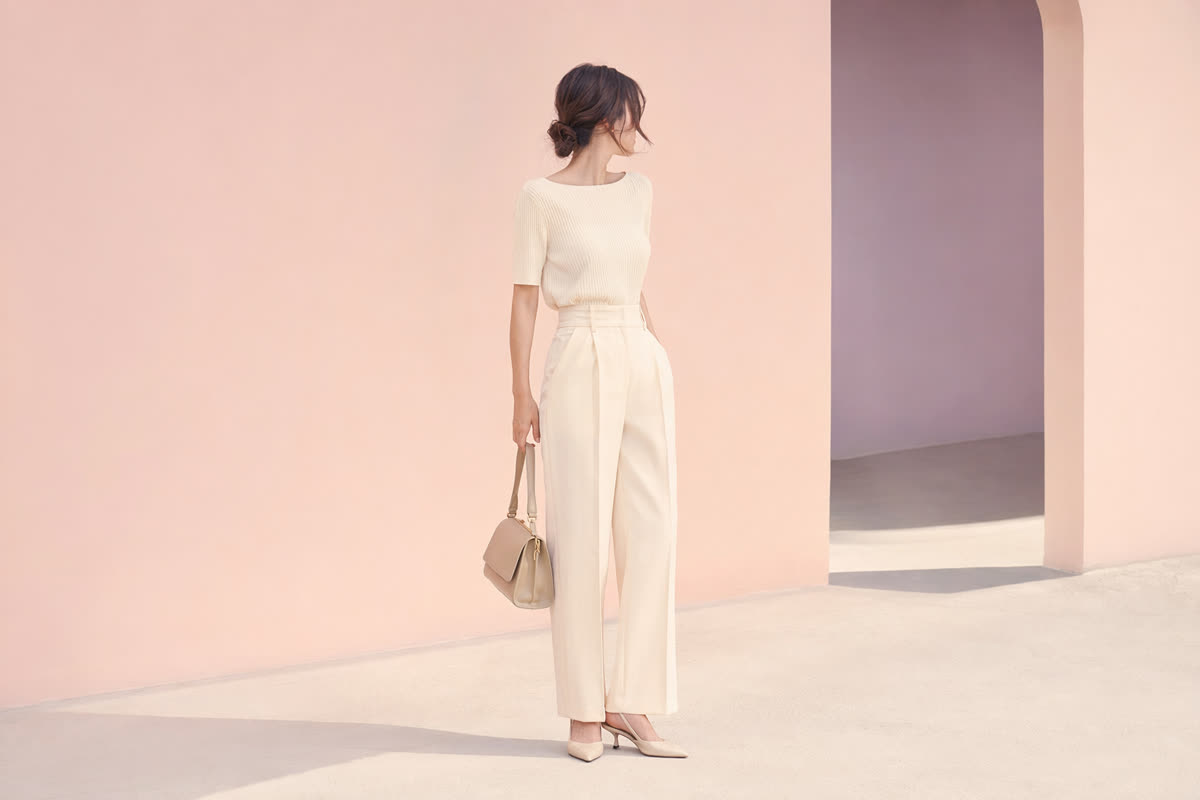
Dressing a petite frame is not about hiding it or faking height. It is about controlling proportion so the eye reads one clean, continuous line instead of a body chopped into short segments. Most "petite rules" you have heard — no maxi dresses, no wide-leg pants, no big prints — are half-truths. The real variable is almost never the garment. It is where the hem lands, where the waist sits, and how much vertical line you preserve.
And here is the reassuring part: you probably already own most of the pieces that work. The high-waisted jeans, the cropped jacket, the fitted knit, the dress that just needs an inch off the hem. The skill is assembling them with proportion in mind.
Build one long vertical line
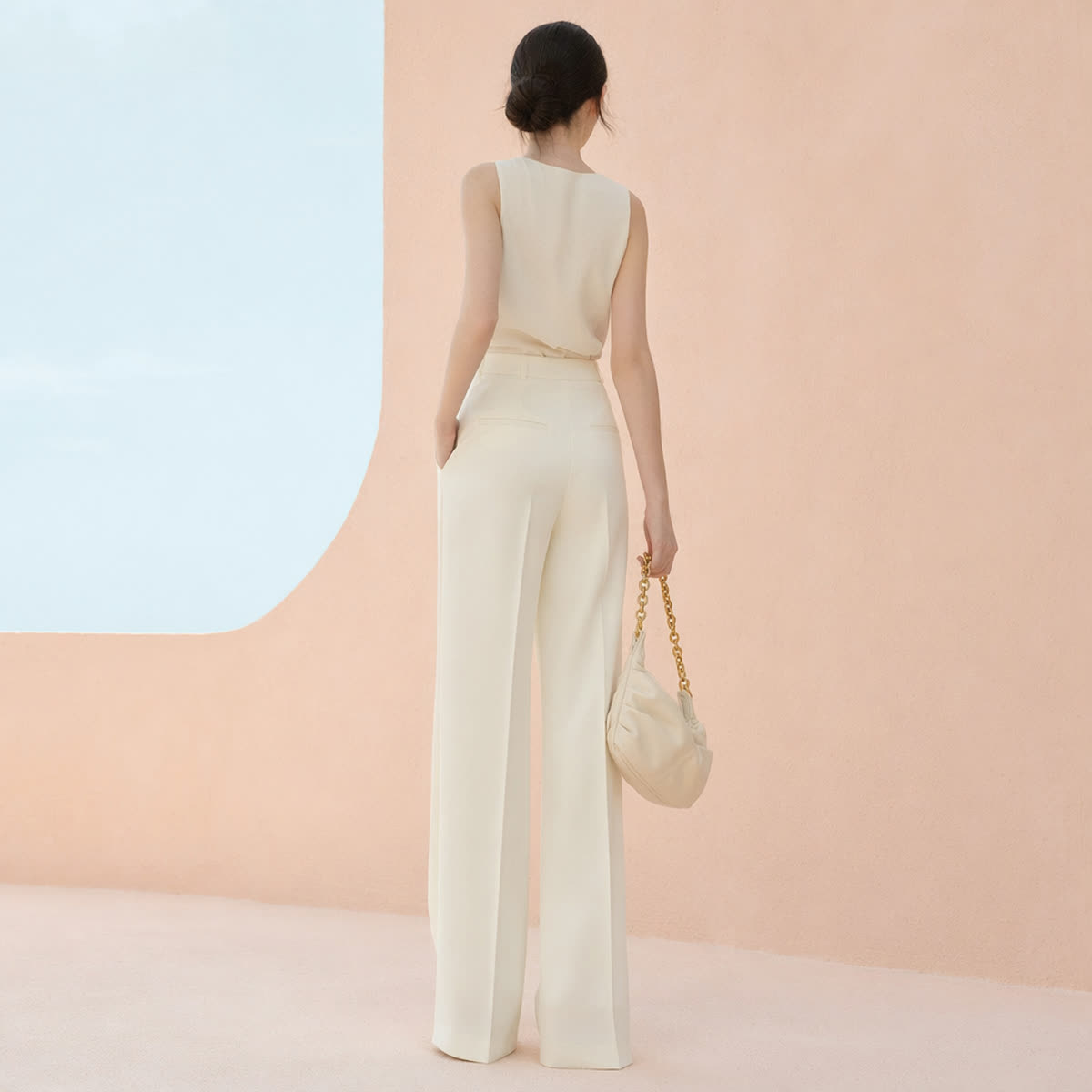
The single most powerful move for a shorter frame is eliminating horizontal breaks. Every hard line across your body — a contrasting waistband, a hem at the widest part of the hip, a belt in a clashing color — tells the eye to stop and resets your apparent height.
- Go monochrome, or tonal. A top and bottom in the same color, or close tones, erase the waist break and read as one column from shoulder to shoe. This is the highest-impact, lowest-effort trick available to you.
- Sit the waistline high. High-rise trousers, skirts, and jeans relocate the visual start of your legs upward, which makes them look longer than they are.
- Mind vertical detail. A front button placket, a center seam, a long open cardigan, or a narrow vertical stripe all reinforce the up-and-down line. Reach for these over busy horizontal seaming.
Get hemlines and inseams right
This is where petite outfits live or die. Off-the-rack clothing is cut for an "average" height that almost no one actually is, and a few inches in the wrong place will shorten you instantly.
- Pants should graze the floor in the shoe you wear them with. Too-long fabric pooling at the ankle adds bulk and chops the leg; too-short exposes a gap that breaks the line. A quick hem or a clean cuff is the most worthwhile tailoring you can do.
- Skirts and dresses are about the gap. A hem that ends at the narrowest part of the leg — just above the knee, or at the slim point of the calf — flatters. A hem at the widest point of the calf is the one length to avoid.
- Cropped and ankle-grazer cuts work in your favor, because they end the line deliberately rather than at random. A cropped trouser that hits just above the ankle bone shows the slimmest part of the leg.
- Maxi and wide-leg are fine — once hemmed. They fail at factory length, not by nature. Bring them to floor-grazing over a slight lift and they become a long, elegant column.
Keep jackets and layers short
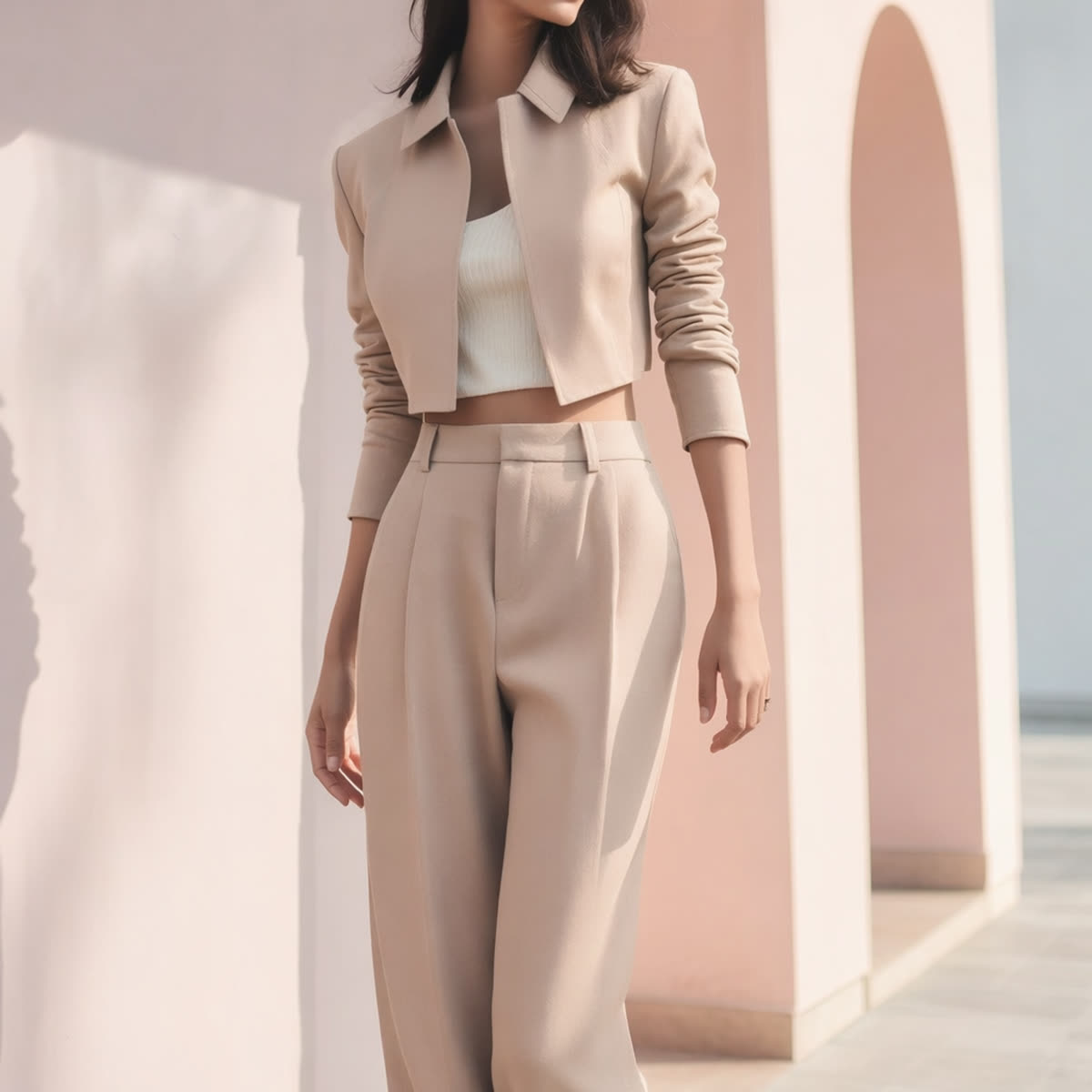
Layering is where a lot of height quietly disappears. A long coat or blazer that ends mid-thigh cuts you across the widest part of the body and hides the leg entirely.
- Favor jackets that end at or above the hip — cropped, waist-length, or a structured blazer that stops at the high hip. This keeps the waist visible and the leg in view.
- Tuck and half-tuck religiously. Even a soft, untailored top gains a waistline the moment you tuck the front in. A defined waist is what makes a high rise actually read as high.
- Open layers should be slim and long, not heavy. A lean, unstructured cardigan or duster left open creates two vertical lines down the front — flattering — whereas a bulky, boxy coat erases the frame. (Winter is where this gets hardest; the same lean-layering logic drives these winter outfit ideas for staying warm without adding width.)
Scale prints and accessories to your frame
Pattern and accessories are not off-limits; they just need to be proportional. The principle is simple: a small frame is overwhelmed by oversized elements, so the eye sees the accessory instead of you.
- Prints: smaller, tighter repeats sit better than large sprawling motifs. A big bold print can work — but keep it to one piece and let the rest stay quiet.
- Bags: a structured medium or small bag complements the frame; an enormous tote can look like it is wearing you.
- Belts: a slim or medium belt in the same tone as the outfit defines the waist without slicing the line in two. A wide contrast belt does the opposite.
- Shoes: a low-vamp shoe (cut low at the top of the foot) and pointed or nude-to-skin tones extend the leg. Heavy ankle straps and chunky soles cut the leg where the foot begins.
The non-obvious insight underneath all of this: height is read relatively, not absolutely. Nobody sees your literal inches — they see the ratio of leg to torso, the number of breaks in your outline, and whether the line flows. Manage those ratios and you look taller without a single inch of heel.
See the combinations you already own
The hard part of dressing petite is rarely the rules above — it is seeing which of your existing pieces actually build that long line together. Most closets already hold the high-waisted bottom, the cropped jacket, the tuckable top, and the right-tone shoe. They just never get tried in the same outfit.
This is where FITPOP helps quietly. It digitizes the clothes you already own and suggests outfit formulas from them, so it can surface the high-waist-plus-tuck-plus-tonal-shoe combination that elongates your frame — using pieces already in your closet. You can preview the proportions on your digital twin before you get dressed, and see where a hem or a tuck would change the line.
The takeaway
Dressing petite is proportion management, not restriction. Keep the line vertical and unbroken, sit the waist high, get the hem to the right spot, keep jackets short, and scale your prints and accessories to your frame. Do that, and the wardrobe you already own starts working with your height instead of against it.