
Winter dressing is the one season where comfort and style openly fight. Pile on enough to stay warm and you risk looking shapeless; dress for the look and you freeze by the bus stop. The fix is not a single magic coat — it is a layering system that lets you add and shed warmth without losing your silhouette.
And the pieces to build it are almost certainly already in your closet: the thin knit you forget about, the fleece you only wear to the gym, the wool coat that comes out twice a year. The skill is assembling them in the right order.
Build outfits in three layers
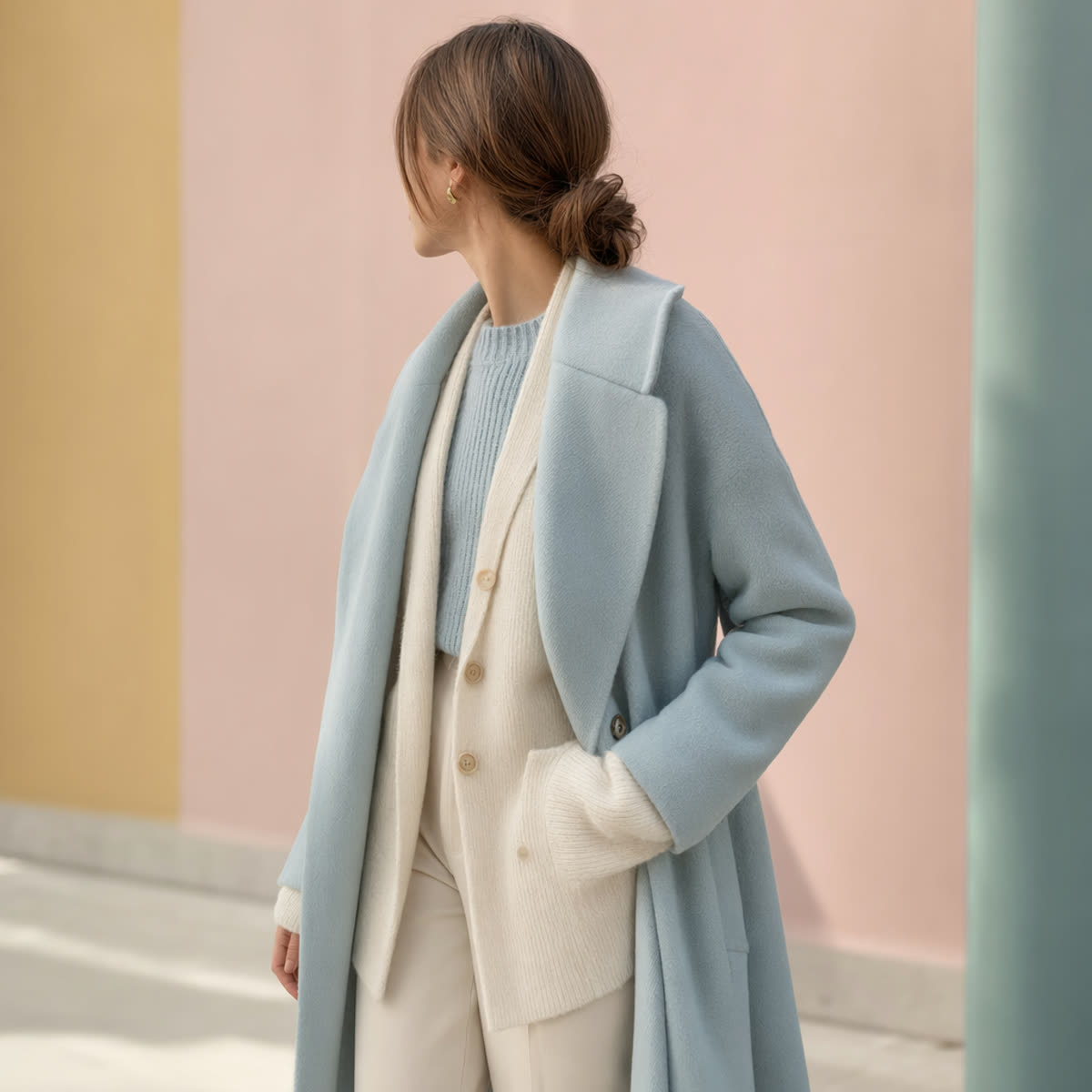
Every warm-but-sharp winter outfit follows the same architecture. Think in three jobs, not three garments:
- Base layer — sits against the skin and manages warmth and sweat. A fitted merino tee, a thin thermal, or a slim turtleneck. This layer should be close to the body, never bulky.
- Mid layer — the insulator. A fine-gauge wool sweater, a fleece, a quilted vest, a cardigan. This is where you add or remove warmth as the day changes.
- Outer layer — blocks wind and wet. A wool overcoat, a parka, a down jacket, a trench with a liner.
The system's power is that it is adjustable. Walking into a warm office, you drop the mid layer and still look complete. Heading back out, you add it back. One heavy coat can only be on or off; three thin layers give you a dial.
Choose fabrics that trap air, not bulk
Warmth comes from trapped air, not from thickness — which is exactly why the right fabric lets you stay warm and stay slim.
- Merino wool — the best base layer there is. It insulates at a fraction of the bulk of cotton, breathes, and resists odor, so a thin merino top does the work of something twice as thick.
- Brushed or fine-gauge wool — ideal mid layers. A tight knit traps heat while staying close to the body.
- Down — unbeatable warmth-to-weight for an outer or vest. A down layer compresses small and weighs almost nothing for the heat it holds.
- Fleece — the affordable mid-layer workhorse; warm, light, and easy to layer under a coat.
The fabric to avoid against your skin in real cold is cotton: it soaks up moisture and chills you the moment you stop moving. Save the cotton tee for a layer that never touches sweat.
Manage proportion so bulk reads as shape
This is the part most people miss. Layers add volume, and volume needs a counterweight or you look wider all over. The rule: keep one half lean.
- Volume up top, slim on the bottom. A chunky sweater and an oversized coat balance beautifully over slim trousers, straight jeans, or a fitted boot.
- Volume on the bottom, structure up top. Wide wool trousers or a full skirt want a tucked knit and a more tailored coat, not another bulky layer.
- Define a waistline. Belt the coat, or half-tuck the sweater, so the layers read as a deliberate shape instead of a column.
- Put the bulk in the outer layer. Let the coat be the volume; keep base and mid layers trim so the silhouette has somewhere to breathe.
The non-obvious move: let the longest layer hang clean. A coat that's longer than the sweater under it creates a vertical line that visually slims everything inside it. Mismatched hems — sweater peeking below a short jacket — are what actually make layering look lumpy, not the layers themselves. (If you're shorter, this vertical-line logic matters even more — the petite proportion playbook goes deeper on keeping the line unbroken.)
Lean on a winter color palette

Winter light is flat and grey, so the outfit carries the contrast. Reach for deeper, richer tones: charcoal, navy, camel, forest, burgundy, cream, rust.
- Go tonal. Stacking shades of one family — oatmeal, camel, brown — makes multiple layers look composed instead of accumulated. Tonal dressing is the cheat code for looking expensive in winter.
- Add one warm accent. A rust scarf or a burgundy beanie against neutrals lifts the whole look on a dull day.
- Let texture do the work. When colors are quiet, mixing a smooth wool coat over a ribbed knit over a fine base adds the interest a brighter palette would.
See the warm combinations you already own
The hard part of winter dressing is not the rules above — it is seeing which of your existing pieces actually layer together. Most closets hold a base, a mid, and an outer that would make a genuinely warm, sharp outfit, but they never get tried in the same look because they live on different shelves.
This is where FITPOP helps: it digitizes the clothes you already own and builds daily outfit formulas from them, so it can surface the thin merino base, the right knit, and the coat that work as one system — and account for the day's cold. You can preview the layered look on your digital twin before you commit, and often find the combination you'd never have reached for on a cold morning.
The takeaway
Stay warm and look sharp by layering thin to thick, choosing fabrics that trap air, and keeping one half of your silhouette lean. Do that, and the pieces already in your closet carry you through the whole season — no new coat required.