
Most closet-decluttering advice fails for the same reason: it tells you what to throw out without giving you a way to decide. So you stand in front of an open wardrobe, pick up a sweater you haven't worn since 2022, feel a small wave of guilt, and put it back. Nothing leaves. Nothing changes.
Decluttering is not about willpower. It's about having a method that makes the decision for you, so you're not relitigating every shirt. Here's the one I use — and a quiet truth worth naming up front: you almost certainly own more than you think you do. Most people wear about 20% of their closet 80% of the time. The other 80% is what we're here to thin out.
Start with the pile method, not the rail
Don't declutter on the hanger. Pieces look reasonable hanging in a neat row — that's exactly why they survive every half-hearted cleanout. The fix is physical: take everything out.
- Pull every item — yes, every one — onto the bed or floor. One category at a time if your closet is large: tops, then bottoms, then outerwear, then shoes.
- Seeing the full volume in a heap is the point. A mountain of clothes you'd forgotten you owned is far more persuasive than a tidy rail.
- An empty closet also resets your bias. Now each piece has to earn its way back in, rather than being grandfathered because it was already there.
This single reframe — earning back in, not deciding what to remove — does most of the work.
Sort into four piles, fast

Now go through the heap once, quickly. Slow deliberation is how guilt creeps in. Make four piles:
- Keep — you wear it, it fits, you'd wear it this week.
- Donate / sell — good condition, just not for you anymore.
- Repair / alter — you'd wear it if the hem, button, or fit were fixed.
- Maybe — genuine uncertainty. Box these, label the box with today's date, and store it out of sight.
The Maybe box is the pressure valve that lets you move fast. If you don't reach into it for three months, you donate the whole thing unopened — you already proved you don't miss it.
Two tests that settle every "maybe"
When a piece stalls you, run it through these:
The 1-year rule. Have you worn it in the last twelve months, across the seasons it belongs to? If a summer dress sat out a whole summer, that's your answer. Twelve months gives every item a fair, complete set of chances. Past that, you're storing it for a version of yourself that isn't showing up.
The would-I-buy-it-again test. Hold the piece and ask: if I saw this in a shop today, at full price, would I buy it? This cuts straight through sunk cost. The jacket was expensive — but the money is already spent whether you keep it or not. If you wouldn't buy it again, it's living in your closet on guilt, not love. Let it go.
For the few pieces caught by sentiment — a concert tee, something inherited — keep them deliberately, but move them out of the everyday rotation. A keepsake isn't clutter. A keepsake pretending to be wardrobe is.
See what you actually own and wear
Here's where most cleanouts go blind: you can sort a pile, but you can't easily see your patterns — that you own four near-identical white shirts, or that a "favorite" blazer hasn't been styled into an outfit in months.
This is the one place a tool genuinely helps. As you declutter, digitize the keepers — photograph each piece into a single visual catalog. Done in FITPOP with Snap-to-Cap, this turns a vague sense of "I have a lot of black tops" into a flat, honest inventory you can scan in seconds. Suddenly the duplicates are obvious, the never-worn pieces stand out, and the genuinely versatile items reveal themselves. Decluttering and digitizing the same afternoon means the next time you think "I have nothing to wear," you can prove yourself wrong from what's already in the catalog. No new purchases required.
Keep it from creeping back
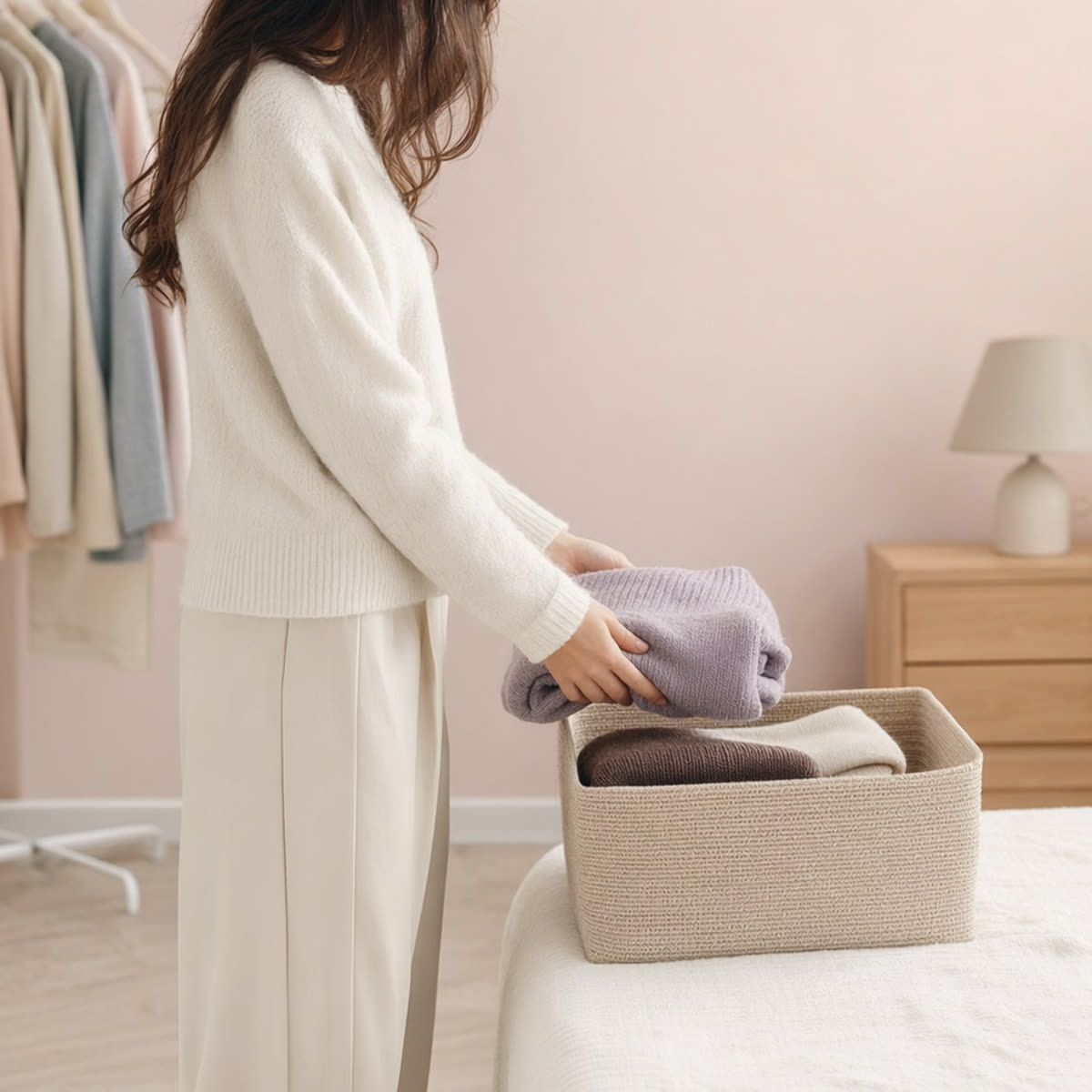
A cleanout is a moment; a clear closet is a habit. Three rules hold the line:
- The one-in, one-out rule. Buy something new, retire something old the same day. Your closet stays at a constant, manageable size.
- The 30-second rule. When you take something off that you didn't enjoy wearing — itchy, ill-fitting, fussy — don't re-hang it. Drop it straight in a standing donate bag.
- Twice-a-year resets. At each major season change, run the pile method again. It takes an hour and never lets the 80% rebuild.
A decluttered closet isn't a smaller closet for its own sake. It's one where everything left is something you'd reach for — which, quietly, is the same thing as having more to wear.
Once you have chosen the clothes to keep, digitize a small usable wardrobe before importing everything. Make one outfit from it first.