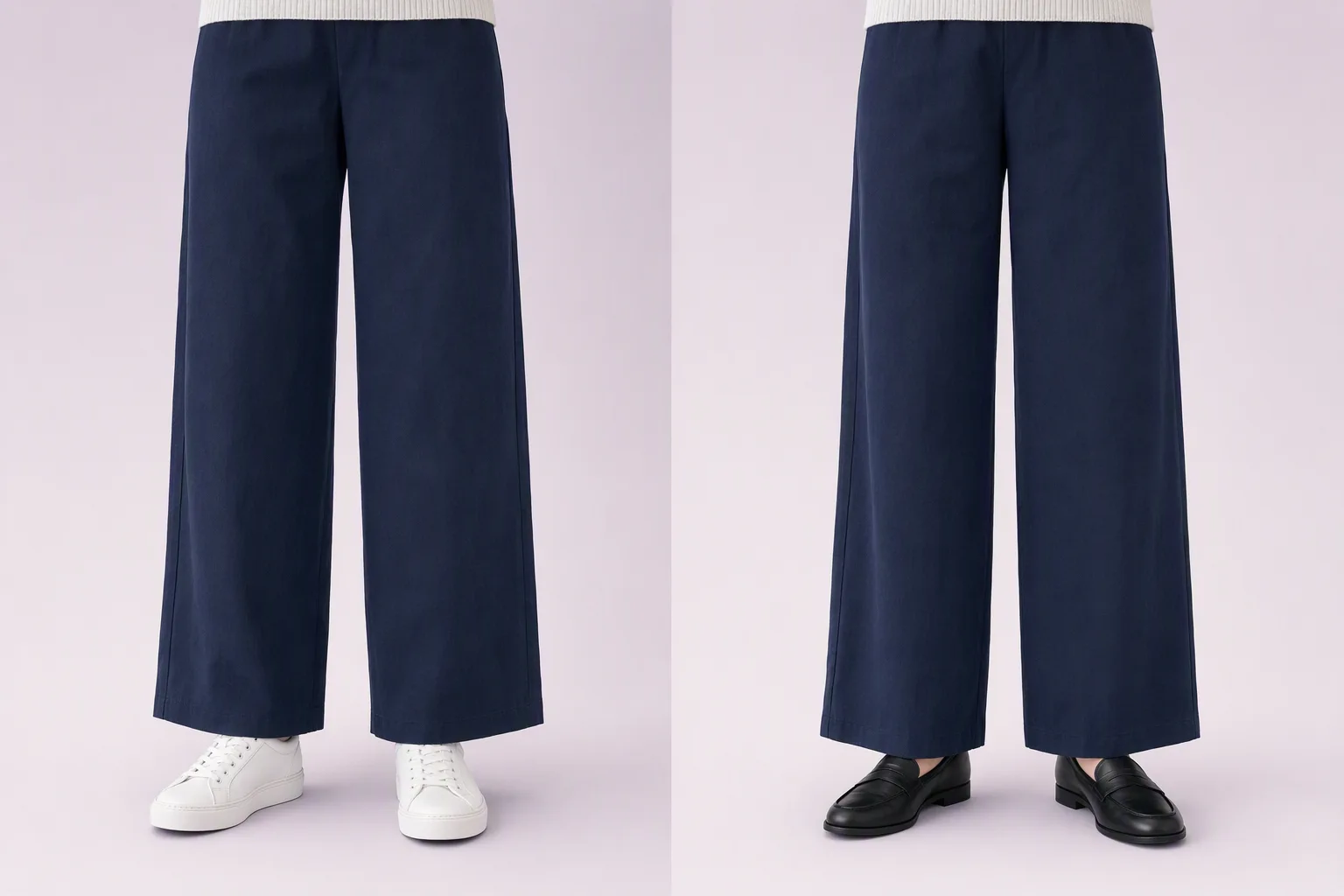
To style wide-leg pants, put on the shoes you intend to wear before judging the hem or choosing a top. Then try one familiar upper layer and check the complete outfit in motion. You can enjoy a loose silhouette, a defined waist or both on different days; none requires changing your body.
Try the wide-leg trouser example in the free outfit maker. Move the pieces, add photos of your own clothes and download a visual reference to review with your actual garments.
Five complete outfits to edit
Illustrative editorial outfits made with AI-generated sample garments. Open a look to replace pieces with photos of your own clothes.
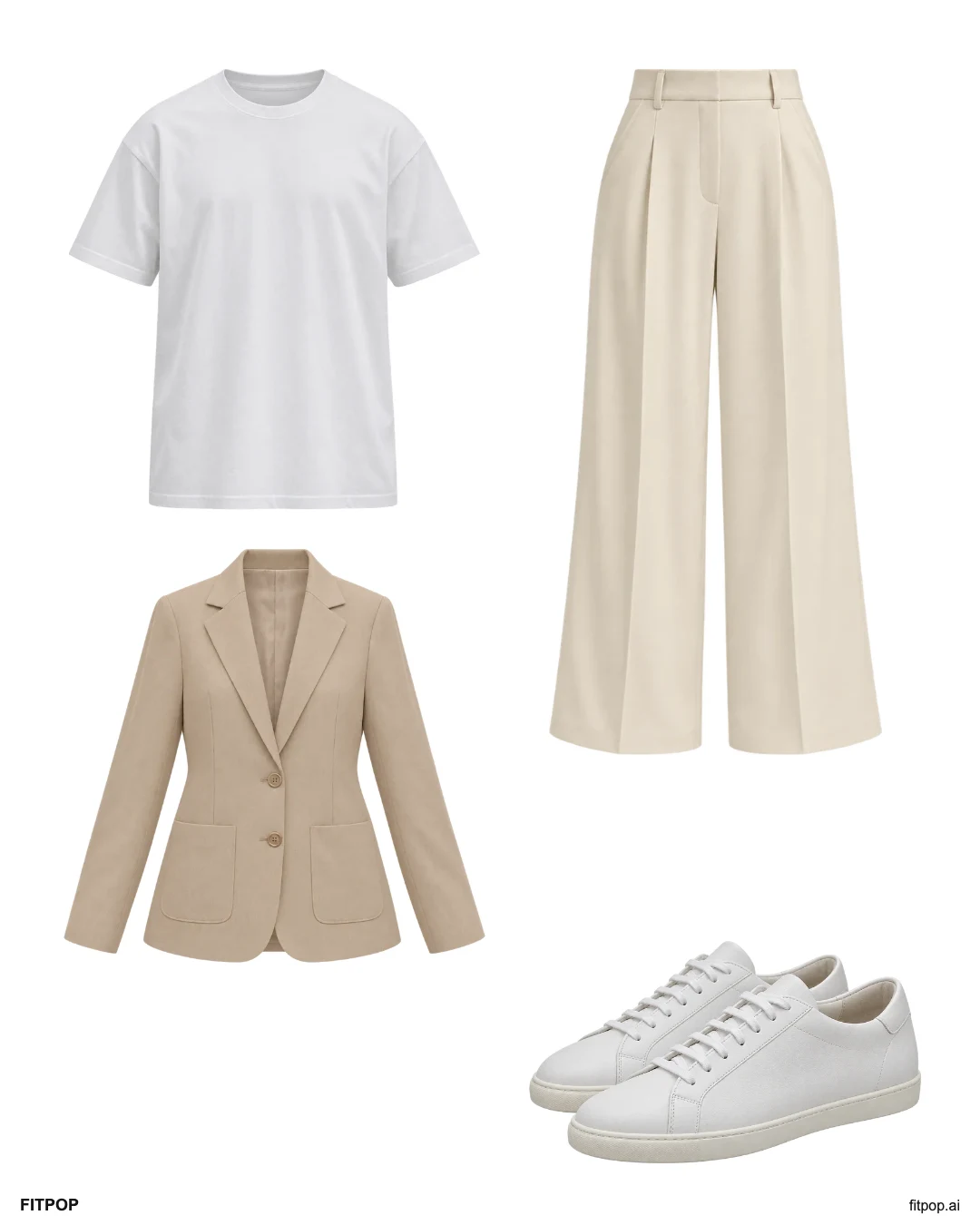
Wide legs with a light blazer
Pieces: White cotton tee, Cream wide-leg trousers, Beige blazer, White sneakers
Use a plain tee inside a beige blazer and keep the cream trousers as the anchor. Sneakers make the combination relaxed; review the hem in motion.
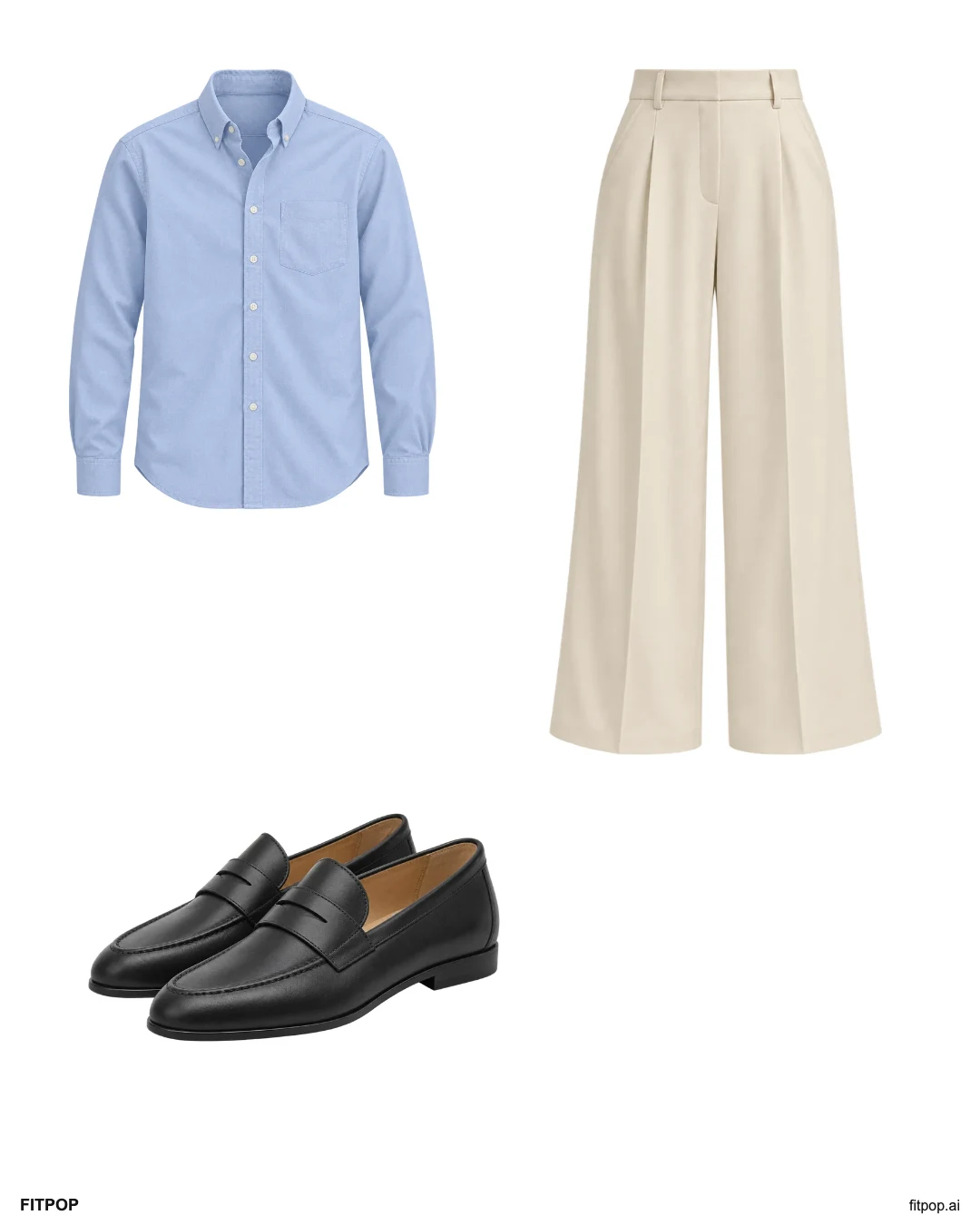
A shirt and loafers
Pieces: Blue Oxford shirt, Cream wide-leg trousers, Black loafers
Keep the cream trousers and add a blue shirt and black loafers. Decide whether you prefer the shirt tucked or loose with the waistband you own.
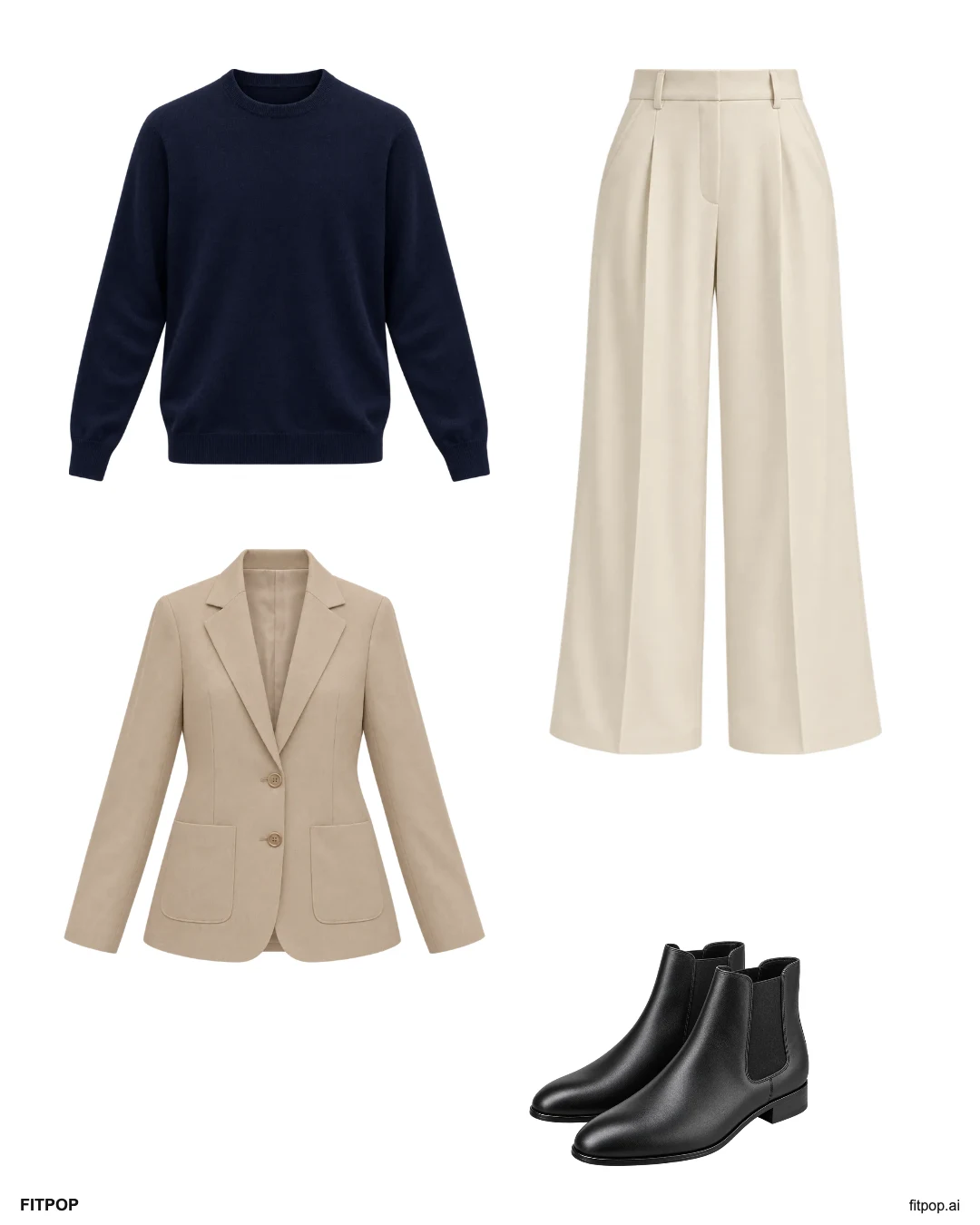
A knit for cooler plans
Pieces: Navy fine knit, Cream wide-leg trousers, Beige blazer, Black ankle boots
A navy knit, beige blazer and black ankle boots add coverage around the cream trousers. Choose layers for your actual forecast and time outside.
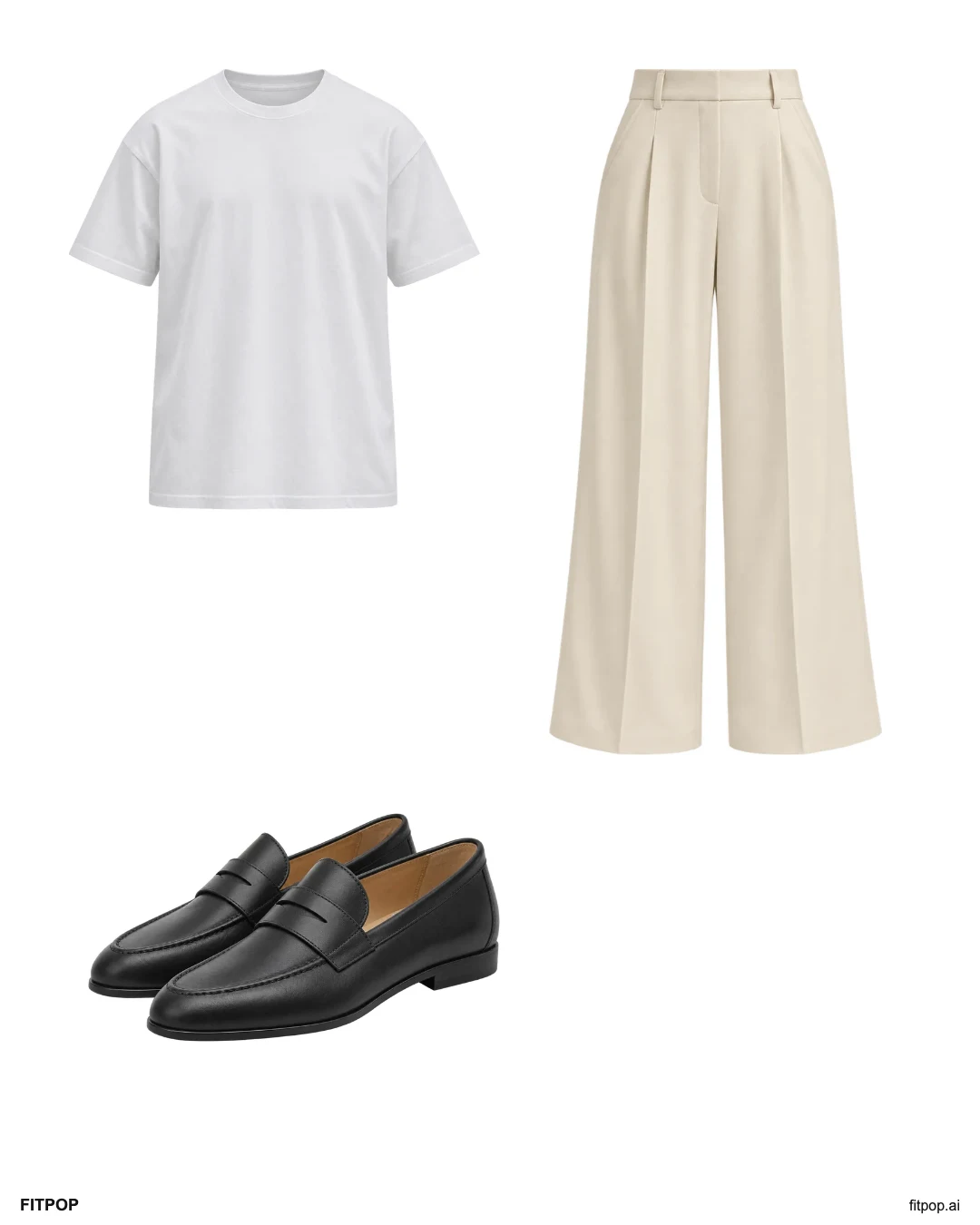
Three pieces, ready to go
Pieces: White cotton tee, Cream wide-leg trousers, Black loafers
A white tee, cream wide-leg trousers and loafers keep the palette quiet. Use pieces you already wear comfortably and add a layer if needed.
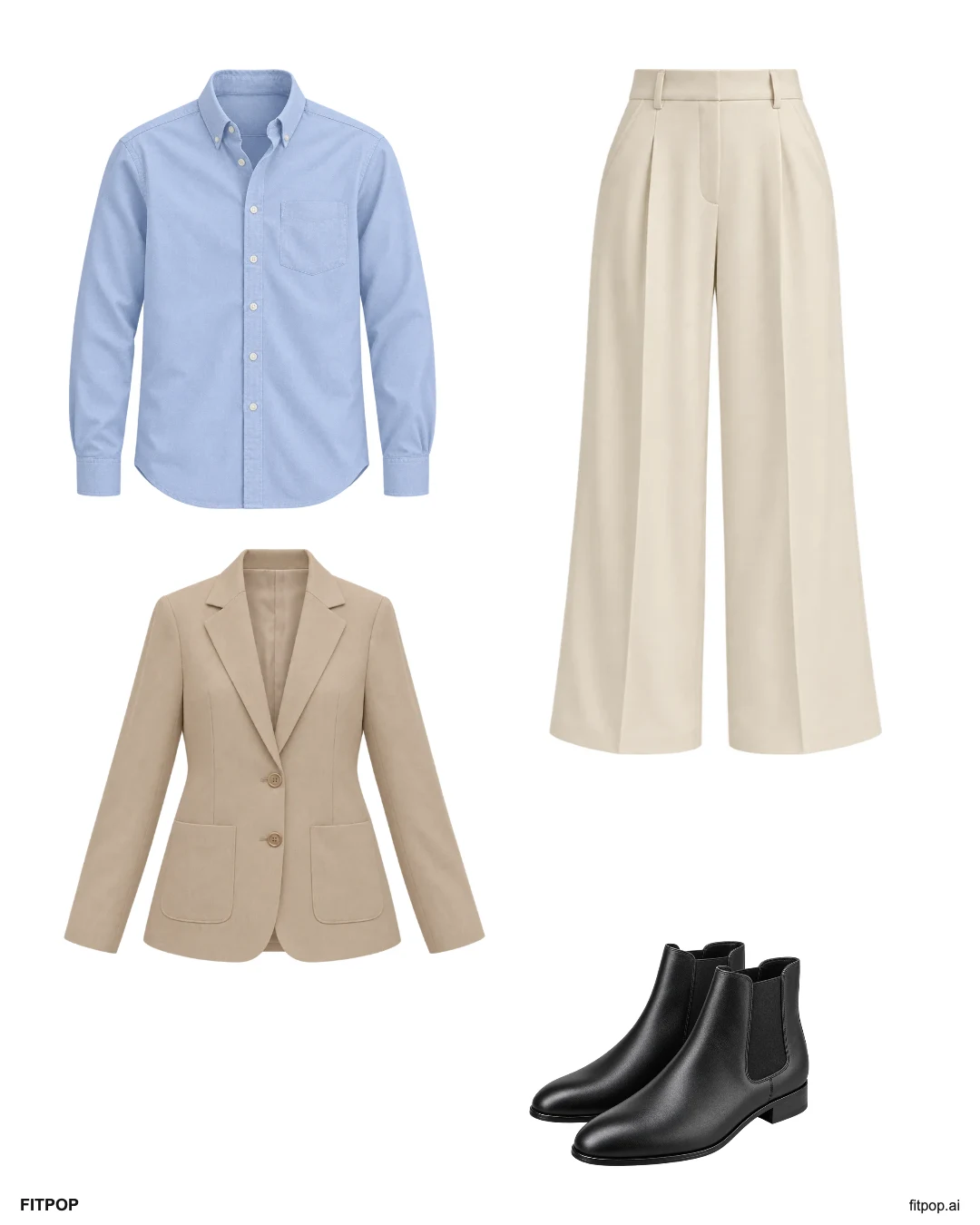
Wide legs for a casual dinner
Pieces: Blue Oxford shirt, Cream wide-leg trousers, Beige blazer, Black ankle boots
Add a blue shirt, beige blazer and familiar boots to the same wide-leg trousers. Try the full combination while sitting and walking before leaving.
Keep the trousers fixed and compare shoes
Start with a pair that feels comfortable at the waist and when seated. Use two shoes you already own and keep the rest of the outfit unchanged. The table is an editorial comparison to try, not a claim that every shoe creates the same result.
| Same navy wide-leg trousers | What to inspect | Possible decision |
|---|---|---|
| With white low-profile sneakers | Does the back hem catch beneath the sole? | Use a shorter existing pair of trousers if it drags |
| With ankle boots | Does the fabric fall freely over the boot opening? | Choose another boot or trouser combination if it catches |
| With black loafers | Can you walk and climb a step without treading on the hem? | Keep the combination only when the clearance works |
A thicker sole does not automatically solve a length problem. Check the front and back while moving, not only while standing in front of a mirror. If you consider an alteration, bring the shoes you expect to wear and discuss the intended length with the person doing the work.
Try three top treatments without ranking them
With the same trousers and shoes, compare a white cotton tee worn loose, the tee partly tucked, and an open blue shirt over it. Notice the outline you prefer and how the fabric behaves while sitting.
A tuck may help keep fabric away from pockets, but it can also make the waistband feel crowded. An untucked top may give the relaxed line you want. A longer shirt and wide trousers can work together; a slim top is not compulsory.
If the combination feels cumbersome, change one physical detail: fold sleeves, try a lighter top or remove an unnecessary layer. Keep changes reversible while deciding. Do not turn a preference for one outfit into a rule about all wide-leg trousers.
Build an outfit for an actual occasion
| Occasion | Named garments | Substitute from your wardrobe |
|---|---|---|
| Weekend errands | Olive wide-leg trousers, ivory tee, denim jacket, familiar sneakers | Cotton shirt instead of the jacket, or a plain knit instead of the tee |
| Office allowing smart casual | Charcoal trousers, blue shirt, navy cardigan, comfortable loafers | Fine knit and an unstructured blazer |
| Informal dinner | Black wide-leg trousers, cream knit, familiar ankle boots | A blouse or cotton shirt with the same trousers |
These are examples to adapt, not shopping instructions. Check workplace or venue rules before using the office and dinner combinations. In a more formal setting, use the blazer guide to explore the outer layer without assuming any jacket meets a stated dress code.
Let movement and weather settle the hem
Walk, sit and use a step. Check whether the hem brushes the ground, catches on the shoe or restricts movement. Pocket contents and a bag can change how the outfit sits, so include what you actually carry.
On wet days, a long hem may collect water even when it looks good indoors. Choose a shorter existing trouser for that day, or another suitable outfit. Roll a hem only if the fabric stays secure and you like the result; not every fabric holds a cuff.
For colder weather, check the trousers with the coat fastened and with any underlayers you need. The winter guide includes a wide-trouser combination. If the shoe is your starting point, see the white-sneaker outfits.
Save the complete combination
Record the exact shoes alongside the trousers. “Charcoal trousers with black boots” is more useful than “wide-leg outfit,” because another shoe can change the hem clearance.
FITPOP's official iPhone listing, checked 9 October 2026, describes batch garment capture, a digital wardrobe, daily ideas and selected-item styling. Start an idea with your saved trousers, then verify the real garments, length and comfort.
Keep the version that suits your day. A useful outfit is one you can move in and want to wear again, whether its top is tucked, loose, fitted or roomy.