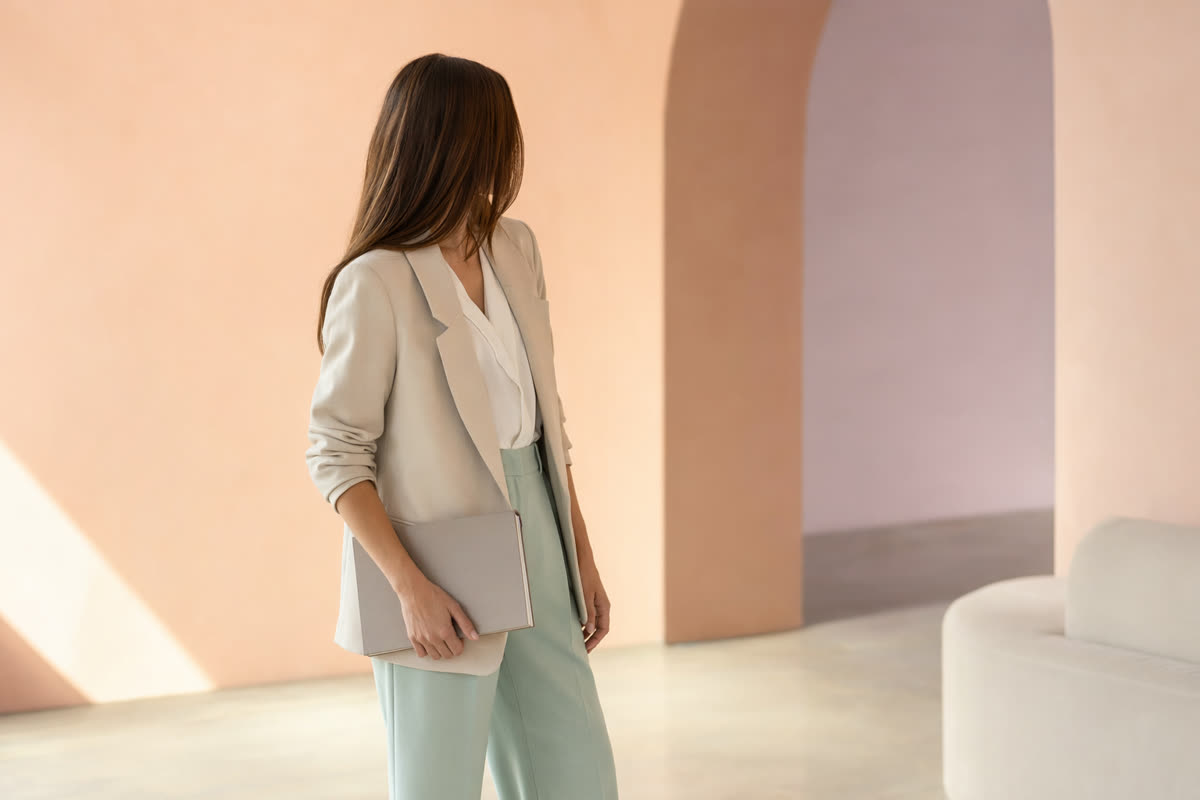
The fastest way to overthink a job interview is to treat the outfit as a personality test. It isn't. Interview attire has one job: match the formality of the company, then get out of the way so the conversation can happen. And the right outfit is almost always already in your closet — you just need to assemble the right version of business casual or business formal from pieces you already own, not buy a costume.
Here is how to decode it.
Match the dress code, then go up one notch
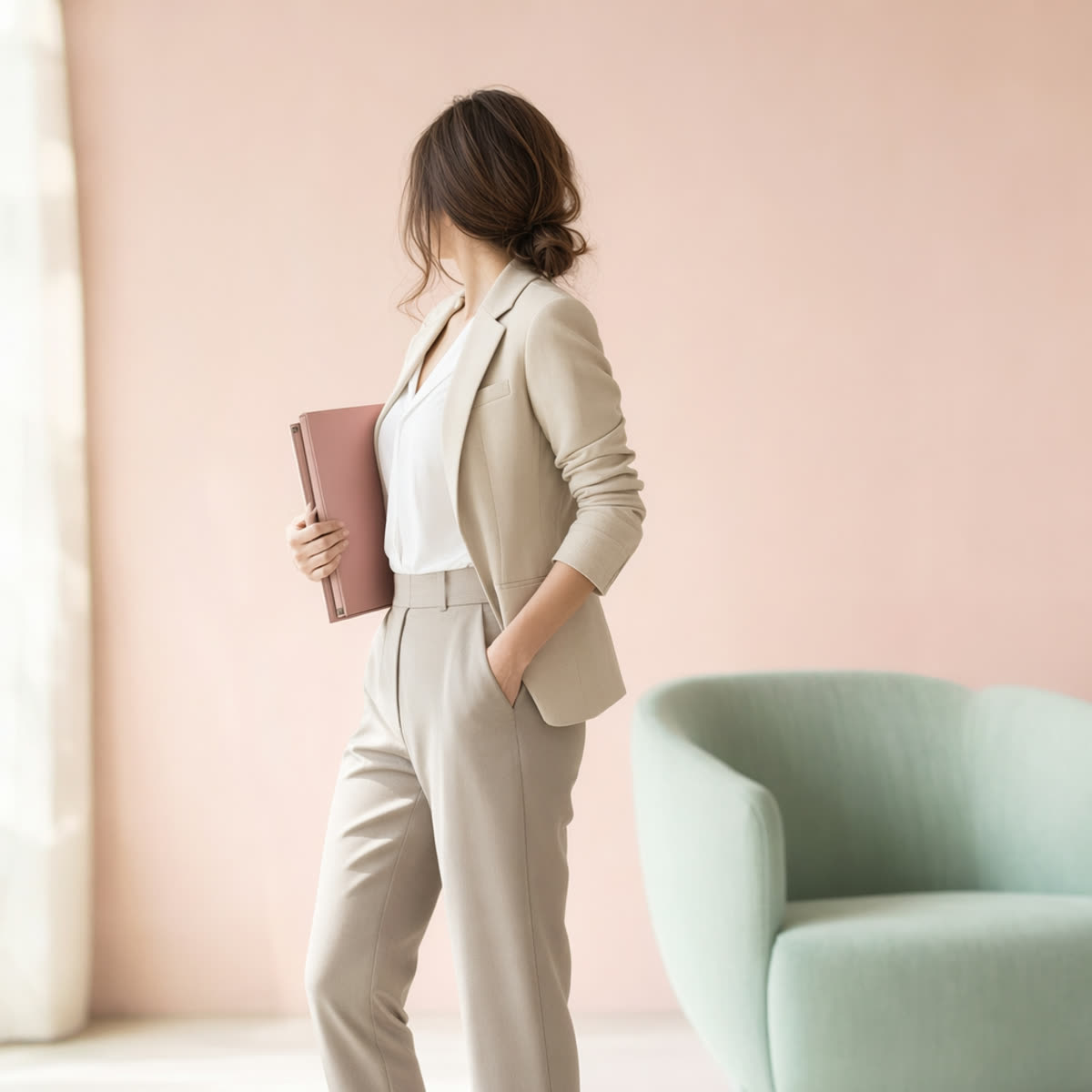
Before anything else, figure out how the company actually dresses, then aim one notch above their daily norm. That single rule resolves most outfit anxiety.
- Business formal (law, finance, consulting, executive roles): A matched suit in navy or charcoal, a crisp white or pale-blue shirt, polished leather oxfords or closed-toe heels. For non-suit versions, tailored trousers with a blazer that genuinely matches in tone.
- Business casual (most corporate, tech-adjacent, agency, client-facing roles): Tailored trousers or a knee-length skirt, a collared shirt or fine-gauge knit, optional blazer, clean leather shoes or loafers. No tie required, but a blazer still elevates.
- Startup / creative casual (early-stage tech, design studios, some media): Dark, well-fitting jeans or chinos, a quality plain tee or fine knit under a structured jacket, clean minimal white sneakers or boots. Casual, but never sloppy — the fit and condition carry it.
If you genuinely can't tell, default to business casual. It is the safe center of gravity and rarely reads as wrong.
Choose fabrics and fit that hold up on camera and in person
Interviews now happen on video as often as in conference rooms, and both settings punish the same things: shine, wrinkles, and poor fit.
- Reach for matte, structured fabrics — wool or wool-blend suiting, cotton twill, ponte, and crisp poplin. They hold a clean line through a long day and don't catch harsh overhead light.
- Avoid thin, clingy synthetics and heavy satin. They wrinkle, sweat through, and shine on webcam.
- Fit beats price every time. A modest blazer that fits the shoulders correctly looks more expensive than an ill-fitting designer one. The shoulder seam should sit at the edge of your shoulder; sleeves should end at the wrist bone; trousers shouldn't pool at the ankle.
A non-obvious tip: on video, a small, clean collar or structured neckline frames your face far better than a busy crewneck. The camera crops to your top third — dress that zone deliberately. A well-fitting blazer is the single most reliable way to read polished on camera, even over a simple knit.
Pick colors that project competence
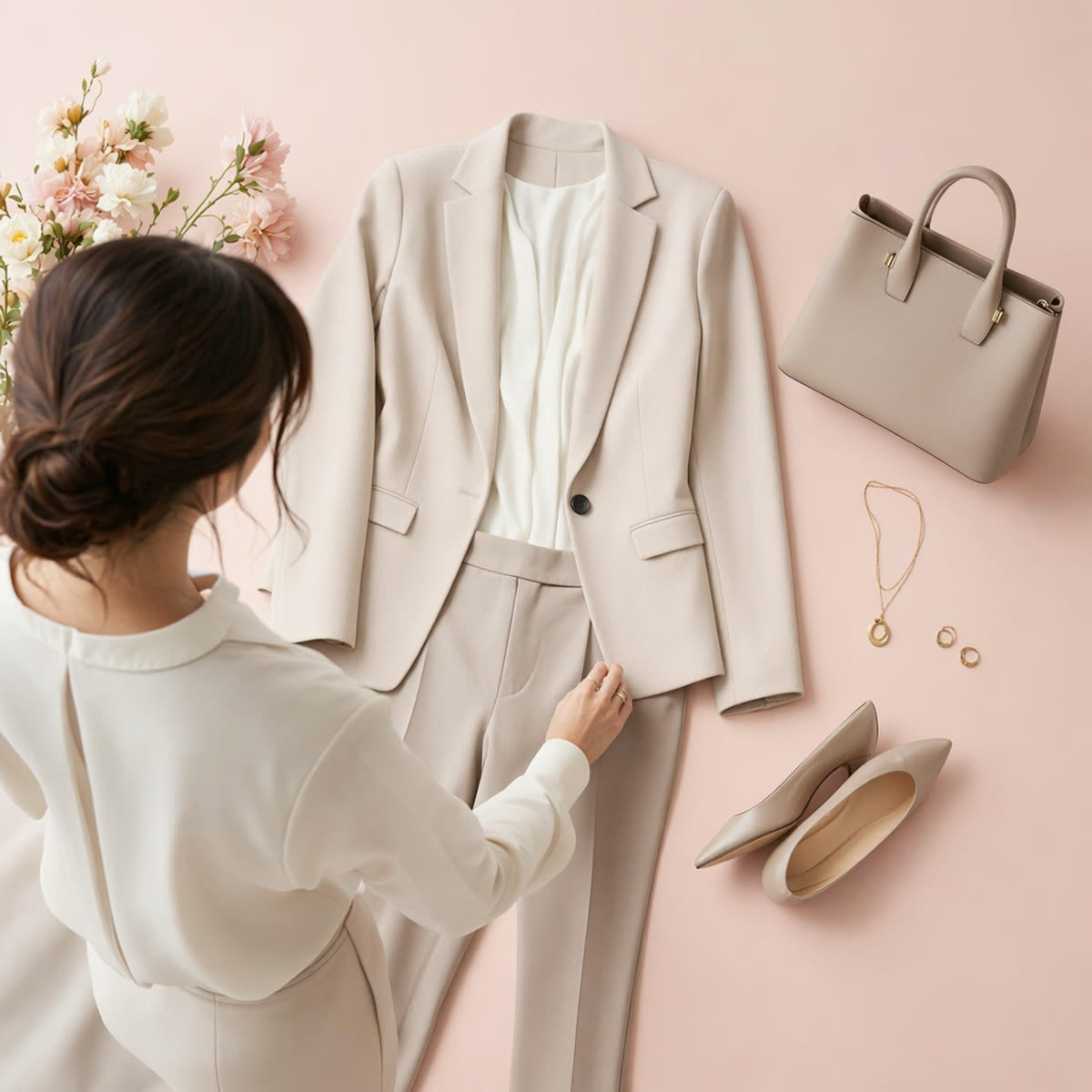
You want the interviewer remembering your answers, not your outfit.
- Dark neutrals — navy, charcoal, deep gray — read as competent and composed. Navy in particular is the most universally flattering interview color.
- Add at most one muted accent: soft blue, burgundy, sage, or warm cream to soften an otherwise austere look.
- Skip neon, loud prints, and large logos. They pull focus and date quickly in photos and recordings.
Build the look from clothes you already own
Here's the part most "interview outfit" advice skips: you probably don't need to buy anything. A navy blazer, a pair of tailored trousers, one clean button-down, and leather shoes already cover the vast majority of interviews. The hard part isn't owning the pieces — it's seeing the interview-ready combination inside a closet full of everyday clothes the night before.
This is where FITPOP genuinely helps. It digitizes the clothes you already own, then surfaces outfit formulas for the occasion — so you can ask for an "interview" look and preview a few business-casual or business-formal combinations on a digital twin before you commit. Instead of panic-buying a new blazer, you rediscover the one already hanging in the back of your wardrobe.
Don't ignore the details
The outfit is only as polished as its weakest point:
- Shoes clean and scuff-free. Interviewers notice, even subconsciously.
- Minimal, quiet accessories — one watch, simple jewelry. Nothing that jingles or distracts.
- Press out the wrinkles the night before, not the morning of.
- Grounds for grooming: tidy hair, trimmed nails, neutral or no fragrance (many offices and people are scent-sensitive).
Quick checklist
- Company dress code identified — then dressed one notch up
- Matte, well-fitting fabrics that hold their shape
- Dark neutral base with at most one muted accent color
- Clean, scuff-free shoes and quiet accessories
- Outfit chosen and pressed the night before — not improvised at 7 a.m.
Get the formality right and the details clean, and the clothes do exactly what they should: disappear, so you become the most interesting thing in the room.