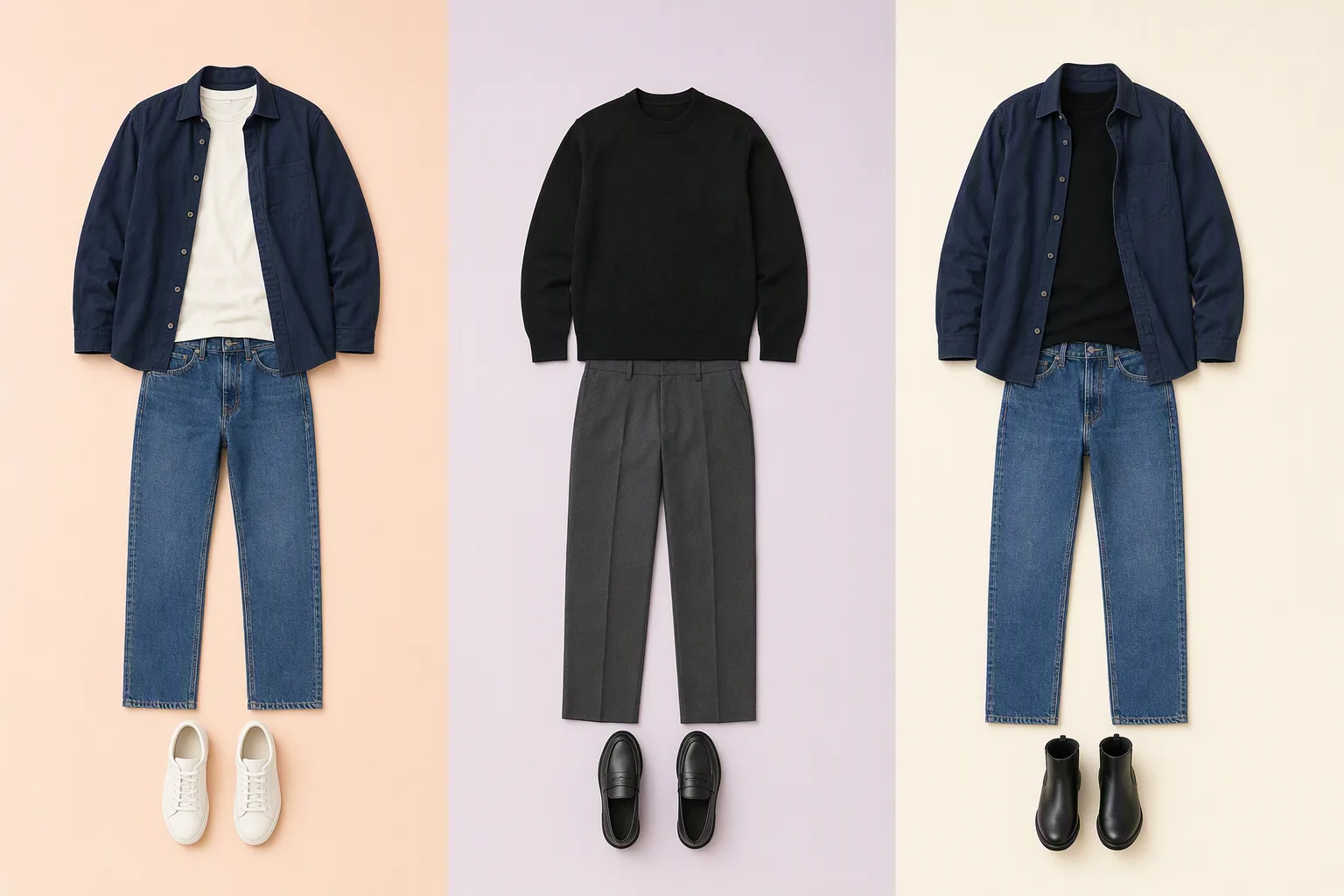
To decide what to wear on a first date, choose for the place and activity before comparing outfits. Coffee followed by a walk asks different things of your shoes than a seated dinner. Start with familiar clothes you own, then adjust the layer or footwear that does not fit the plan.
Find out what the date involves
Check the venue's own dress information if it has any, and confirm whether you will be indoors, outside or both. A restaurant's price alone does not establish a dress code. If plans are open, choose something that works for the likely activity rather than an imagined formal evening.
Look at the forecast for the return journey as well as the start. Include your bag, coat and usual glasses when trying the outfit: these are part of what you will actually wear. Set aside anything waiting for washing or repair.
Three complete looks to adapt
These are editorial examples, not tested customer outfits or a list of required purchases. Use the nearest pieces in your wardrobe.
| Setting | Starting combination | An owned-clothes substitute |
|---|---|---|
| Coffee and a walk | Ivory tee, straight blue jeans, white sneakers, navy overshirt | A striped tee can replace the ivory tee; a cardigan can replace the overshirt |
| Seated dinner | Black knit, charcoal trousers, comfortable loafers, unstructured blazer | A plain dress and cardigan, or a blouse with the same trousers |
| Casual evening out | Black knit, the same blue jeans, familiar ankle boots, navy overshirt | Dark jeans, a cotton shirt and your usual jacket |
For coffee, leave the overshirt open over the tee, or wear it closed according to your preference. There is no single required silhouette. If sneakers are your reliable walking option, our white-sneaker guide offers more combinations.
At dinner, try the waistband while seated and reach forward as you would at the table. A blazer is optional unless the venue requires a jacket; the blazer guide shows how to reuse one you own.
For the evening look, keep the boots only if they suit the walk or time standing. Loafers or sneakers may be a better choice where permitted. Carry a layer you can remove, rather than choosing an outfit comfortable only in the outdoor temperature.
Adapt the journey without rebuilding the outfit
Suppose the café plan includes a riverside walk and possible showers. Keep the ivory tee and jeans, replace the overshirt with your rain-appropriate outer layer, and choose familiar footwear suitable for wet ground. Do not assume ordinary leather or canvas is waterproof; check the particular shoe.
If long trouser hems drag with the chosen shoes, use an existing shorter pair. In warmer weather, substitute your lighter cotton shirt or linen trousers if those are comfortable for the occasion. These changes solve practical needs without requiring a new outfit theme.
Cold-weather plans may need a warmer coat and removable middle layer. The winter outfit guide explains how to keep the indoor outfit usable too.
Change one thing and check it
If the outfit feels unfamiliar, identify the part responsible. Compare a cardigan with your usual jacket while keeping the top, bottom and shoes fixed. If you want a personal detail, use a scarf, earrings or a bag you already enjoy.
Walk, sit, raise your arms and put the coat on. Check straps, closures and pocket access. If you spend the trial pulling at a neckline or readjusting a shoe, change that item. You do not need to decide that the whole outfit failed.
A useful stopping point is an outfit appropriate for the plan, ready to wear and comfortable in motion. Repeating something that has worked before is a valid choice.
Keep the combination you would wear again
Make a short note of the exact garments and the adjustment that helped. FITPOP's official iPhone listing, checked 9 October 2026, describes photographing clothes into a digital wardrobe, daily outfit ideas and styling around a selected garment. Use suggestions as starting points and check the actual clothes yourself.
For this date, a clear plan and one wearable combination are enough. The outfit does not need to promise anything about how another person will respond.