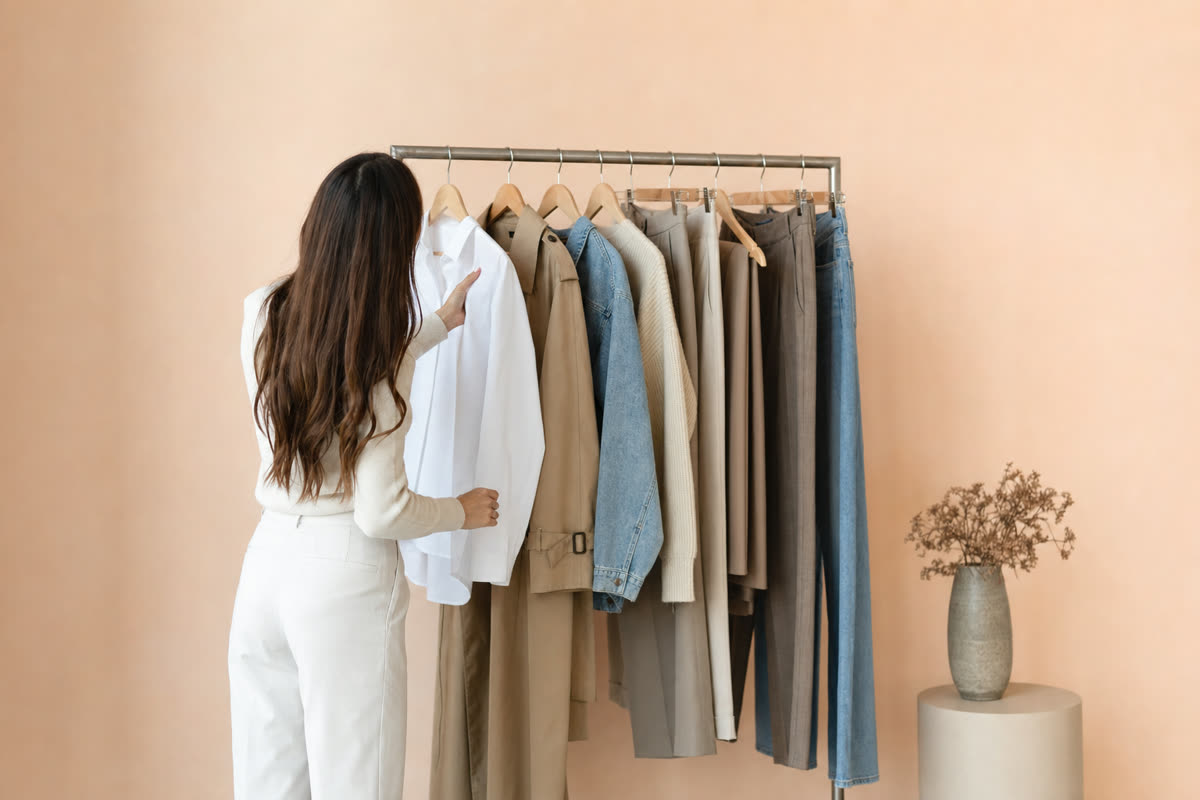
There is no shortage of "wardrobe essentials" lists, and most of them read like a shopping cart: buy the white tee, buy the trench, buy the loafers. This one starts from a different place. You probably already own most of these. The work isn't acquiring a canonical list — it's recognizing the versatile core hiding in a closet you already paid for.
An essential is not a trendy piece or a perfect piece. It is a high-pairing, low-friction piece: one that works with most of your other clothes, crosses more than one occasion, and gets worn so often its cost-per-wear quietly drops to near nothing. Below is the canonical set, and more importantly, why each one earns the title.
Well-fitting tops are the foundation
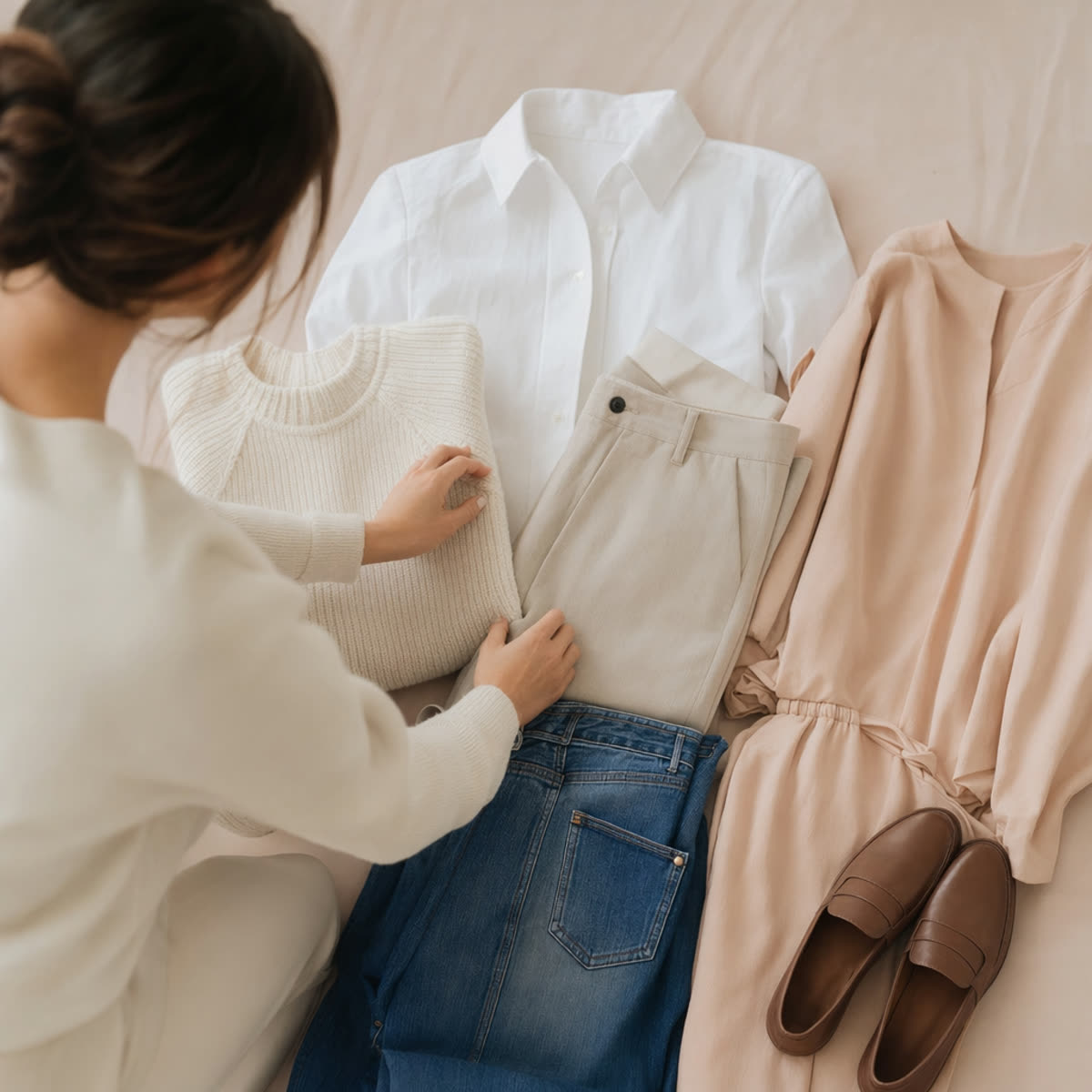
Tops do the most pairing work in any wardrobe because every outfit needs one and most bottoms are neutral. The essentials here are not exciting, and that is the point:
- A crew or V-neck tee that actually fits — not the free conference shirt, but one cut for your shoulders.
- A button-up shirt in white or a soft neutral, which reads casual untucked and sharp tucked.
- A fine-gauge knit (crewneck or turtleneck) that layers under a jacket without bulk.
Why they earn it: a top that fits pairs with every bottom you own. One good knit can appear in a dozen outfits in a month. That repetition is what makes the cost-per-wear math work — a $60 shirt worn 80 times costs less per wear than a $20 novelty top worn twice.
Neutral trousers and one great denim
Bottoms are where versatility is won or lost. You need fewer than you think, but they have to be neutral enough to disappear under any top.
- One pair of tailored trousers in black, navy, or stone — the piece that instantly makes an outfit look intentional.
- One pair of well-fitting jeans in a mid or dark wash, no distressing, that you can dress up or down.
Why they earn it: a neutral bottom is a multiplier. Pair two neutral bottoms with five tops and you already have ten outfits before adding a single layer. Loud or patterned bottoms do the opposite — they shrink your combinations because fewer tops agree with them.
A layer that does the heavy lifting
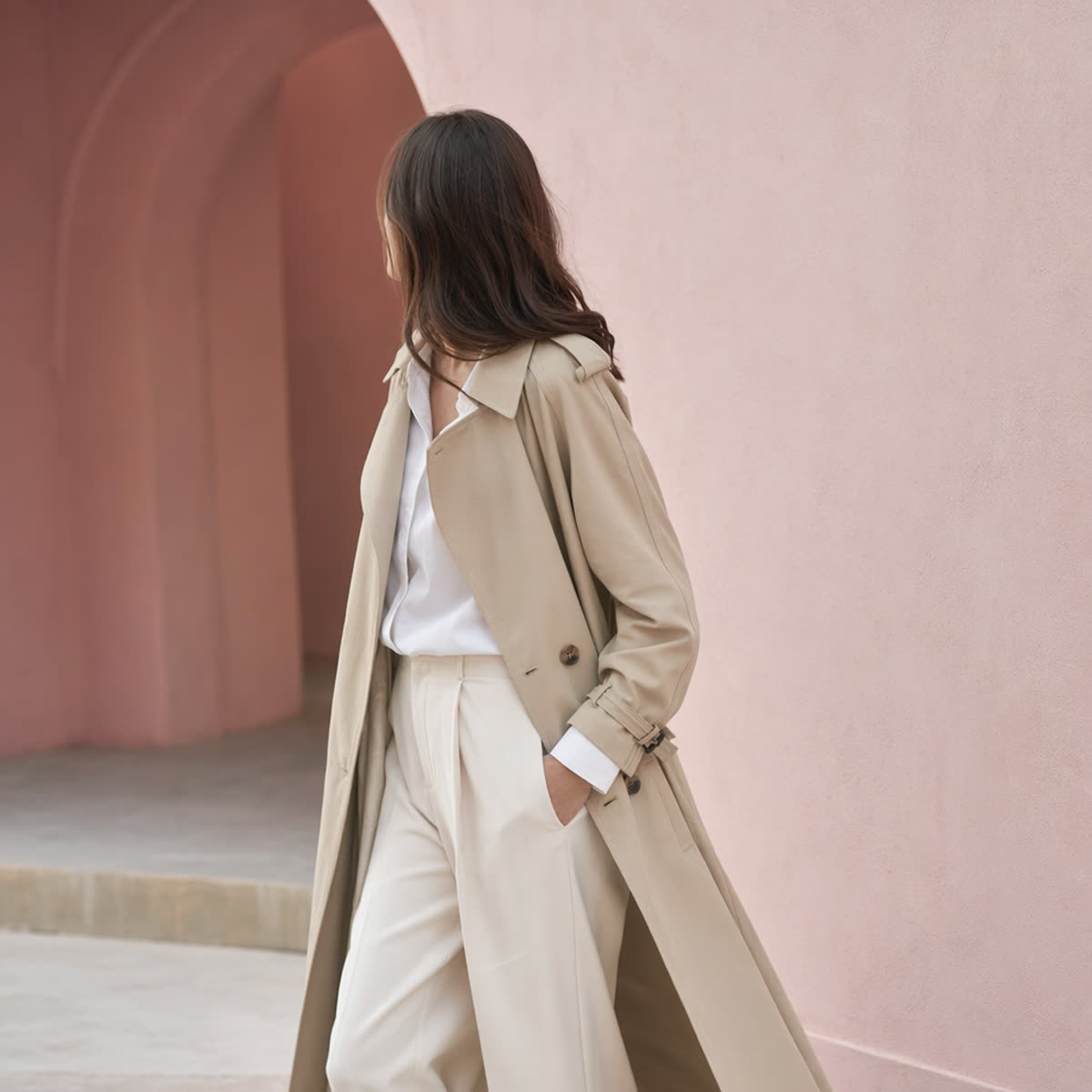
A single layering piece changes the temperature, the formality, and the entire read of an outfit. This is the most underrated essential because it transforms pieces you already own rather than adding new ones.
- A blazer for structure — instantly elevates a tee-and-jeans into smart-casual.
- A cardigan or overshirt for softness and warmth that still looks composed.
- A denim or utility jacket for the casual end of your week.
Why it earns it: a layer is the cheapest way to double an outfit's range. The same shirt and trousers read "weekend" alone and "meeting" under a blazer. You likely own one or two layers already — the question is whether they're neutral enough to go over everything.
A dress or jumpsuit that needs no styling
This is the complete-outfit-in-one-piece essential — the thing you reach for when you have no energy to assemble a look.
- A simple dress in a solid color and a flattering, occasion-flexible cut.
- Or a jumpsuit, if dresses aren't your silhouette.
Why it earns it: it removes a decision entirely. Add the layer above and the shoes below and you have three different outfits from one garment. For anyone who does not wear dresses, this slot can simply double down on a second neutral bottom — essentials are categories, not commandments.
Quality shoes that cross occasions
Shoes are where it pays to own fewer, better. Two or three versatile pairs beat a closet full of single-occasion footwear.
- One clean, minimal sneaker (white or neutral) for everyday and smart-casual.
- One leather shoe — a loafer, an ankle boot, or a simple flat — that works for both work and dinner.
- One occasion shoe if your life demands it (a heel, a dress boot).
Why they earn it: shoes anchor the formality of the whole outfit, and good ones last for years, so their cost-per-wear is among the lowest in your closet. A scuffed everyday shoe undermines well-chosen clothes; a clean versatile pair quietly elevates them.
Essentials shift with your lifestyle
The categories above are fixed. The specific pieces are not. Build essentials around the week you actually live, not an aspirational one:
- Office-based: the trouser and blazer carry your week; invest there.
- Parent or hands-on work: durable denim, an easy knit, and a sneaker that survives the day.
- Remote or hybrid: an elevated knit and a collared shirt that read polished from the waist up on camera.
If you've never worn the structured blazer you bought, it isn't your essential — no matter how many lists insist it is.
See which essentials you already own
The hardest part of this isn't the list — it's seeing what you already have against it. Most closets quietly hold four of the five essential categories; the missing one feels like "nothing to wear."
This is where FITPOP helps: it digitizes the clothes you already own and sorts them by how they actually combine, so you can see at a glance which essentials are covered and which slot is genuinely empty. Instead of buying a whole starter list and duplicating pieces, you fill the one real gap — and preview the new outfits it unlocks on your digital twin first.
The takeaway
Wardrobe essentials aren't a shopping list — they're a lens. A few well-fitting tops, a neutral bottom or two, a layer, a one-piece outfit, and quality shoes will carry most of your week. Check your closet against that lens before you check out a cart. The odds are good you already own the essentials. You just haven't been wearing them like it.