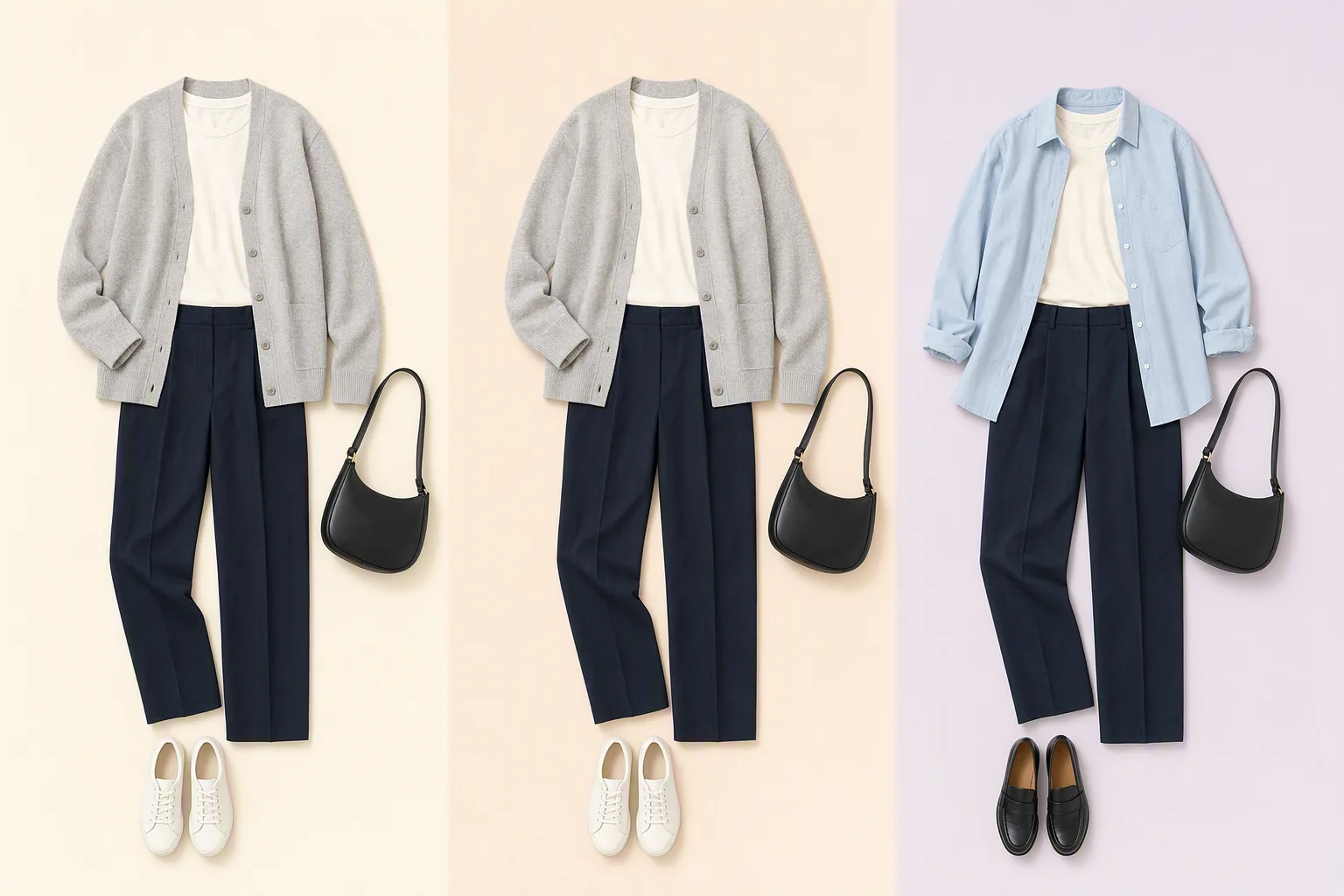
Repeating an outfit can mean wearing the same complete combination again, or keeping a familiar base and adapting it to another activity. Start with clothes you own and enjoy wearing. A useful repeat does not have to look new.
A public reader question about repeating favorite clothes asks how often the same outfit is acceptable. The practical answer begins with clothing readiness, your plans and whether you want a change.
Choose one base and name every piece
Our editorial example uses a cream cotton tee and navy straight trousers as the fixed base. The complete starting outfit adds white sneakers, a grey cardigan and a black shoulder bag. Available alternatives are a blue shirt, familiar black loafers, a red knit and blue jeans.
These are illustrative wardrobe pieces, not customer results. The settings below assume a casual office, a walking café visit and an informal seated dinner in mild weather. Follow the actual requirements of your workplace or venue if they differ.
Try the original outfit first. Sit, walk and carry the bag as you normally would. A base that needs constant adjusting will not become easier simply because it appears in three rows of a plan.
Three occasions, with an unchanged version included
| Occasion | Fixed base | Layer, shoes and bag | Reason for the choice |
|---|---|---|---|
| Casual office | Cream tee + navy trousers | Grey cardigan + white sneakers + black shoulder bag | Familiar walking shoes and removable indoor layer |
| Café and a walk | Same cream tee + same navy trousers | Same cardigan + same sneakers + same bag | No change: the original outfit already serves the activity |
| Informal seated dinner | Same cream tee + same navy trousers | Blue shirt worn open + black loafers + same bag | Optional layer and shoe variation, if comfortable for the journey |
The dinner variation is a choice, not a rule that restaurants require loafers. If the sneakers and cardigan suit the venue and you prefer them, repeat the unchanged outfit there too. Check whether the open shirt gives enough warmth; appearance alone does not answer that.
This sequence demonstrates three occasions, not three guaranteed wears between washes. Schedule the repeats when each garment is ready, including after any needed cleaning.
Change only what the next activity requires
Before changing anything, name the difference: more walking, a colder room, rain, an actual dress instruction or your wish for a different look. Then change the relevant piece and check the result.
A longer route might keep the sneakers in the dinner outfit. A colder room might keep the cardigan instead of the shirt. Rain may require suitable existing outerwear and different footwear; update the outfit rather than hiding those practical pieces from the plan.
If the only reason is variety, a cuff, a different layer or familiar accessory is enough to try. You also have permission to leave it alone. There is no need to promise that nobody notices repetition or to disguise a garment you like.
Make availability and laundry explicit
After wearing, check whether each garment is ready again and follow its care instructions. Activity, weather, spills and your own comfort affect that decision. This guide does not assign a universal number of wears to tees, trousers or shoes.
If the cream tee is in the wash, use the red knit with the navy trousers and appropriate shoes. If the trousers are unavailable, use the clean blue jeans if the occasion permits them. Those substitutions make a backup outfit; record the change rather than calling it an exact repeat.
Allow for drying and any care tasks before scheduling the original outfit again. If both base pieces are unavailable, choose another complete clean combination. A repeat plan is useful only when the clothes can actually be worn.
Keep a reference you can use next time
Write the garment names, the occasion and any adjustment that mattered: “sneakers stayed for the longer walk” or “shirt needed the cardigan over it in the cold room.” A photo can help you recognize the pieces, but it cannot show how the waistband felt while sitting.
FITPOP's official listing, checked 9 October 2026, describes photographing clothes into a digital wardrobe and building outfits around a selected garment. Start from a familiar saved piece when you want another combination. You still check availability, comfort and the actual occasion.
Let repetition guide the next decision
If a base works repeatedly, it has earned a convenient place in your rotation. It does not require buying duplicates or eliminating outfits you enjoy less frequently. Use the capsule wardrobe example to give a small set of garments specific days and backups.
If the base repeatedly fails, describe the obstacle rather than forcing another repeat. The essentials worksheet can clarify which role is missing. Keep what makes the day easier; optional variety can follow whenever you want it.