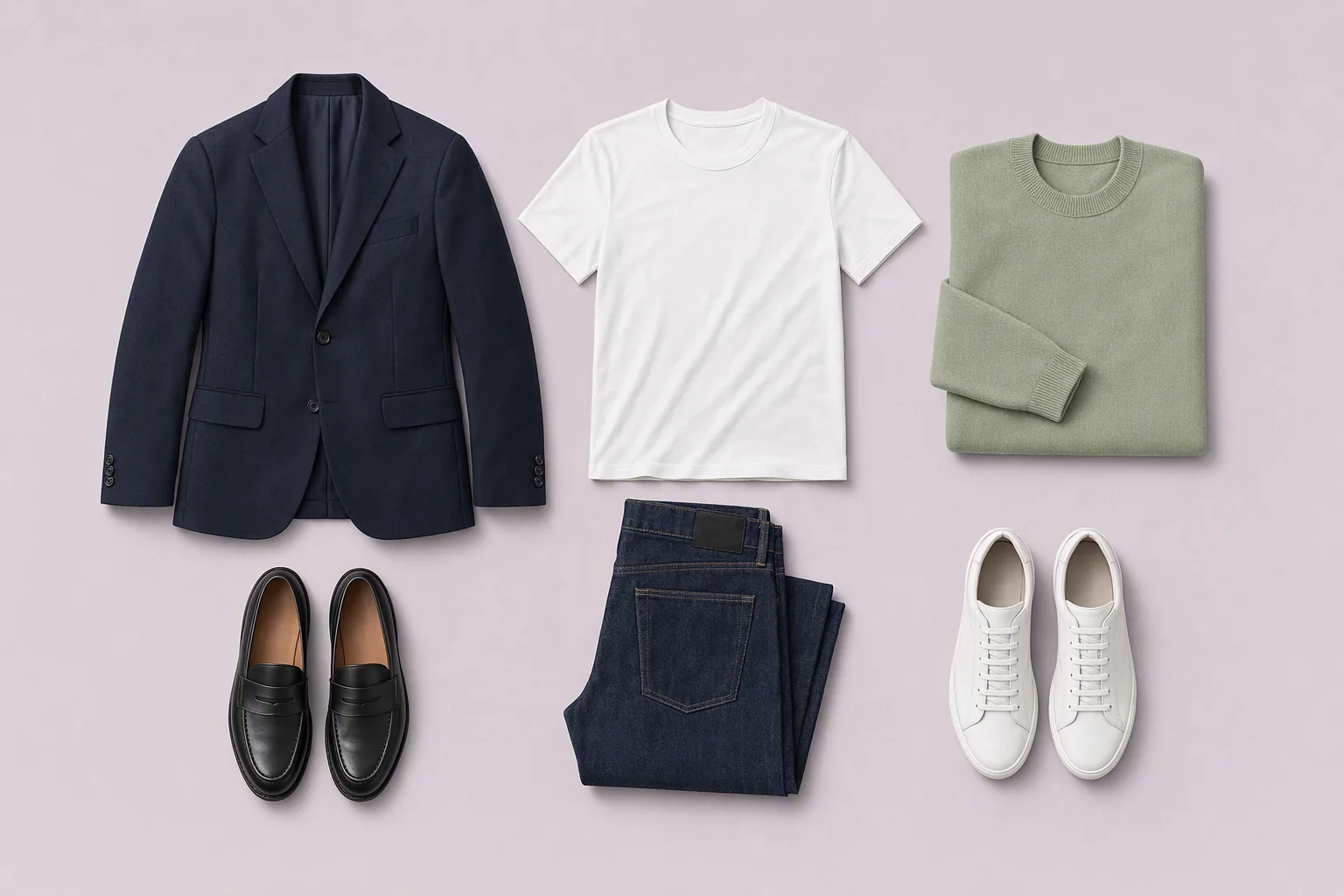
To find your personal style, start with the clothes you choose repeatedly and work out why they earn that place. Look at comfort, shape, color and the activities each outfit supports. You can learn this from your current wardrobe before buying anything or choosing an aesthetic label.
The aim is a set of preferences you can use when getting dressed. A style name is optional; knowing which trousers you enjoy wearing all day is useful immediately.
1. Record an ordinary week of getting dressed
Take a quick outfit photo or write a short note each day for a week. Include the shoes, outer layer and bag if you used them. At the end of the day, add what worked and what you kept adjusting.
Keep the notes concrete: “liked the open collar,” “waistband pressed when sitting,” “red made the grey outfit more interesting.” Record the activity too. A combination that suited a seated dinner may be inconvenient for a walking commute.
Repeated wear is a clue, not automatic proof of preference. You may wear a black shirt because work requires it or because it is the only clean one. Mark those constraints so they do not become mistaken style rules.
2. Separate the details you like from the ones you tolerate
Lay out three outfits you enjoyed and one that felt wrong. Compare the garments rather than your body.
| Detail | What to notice | A useful preference statement |
|---|---|---|
| Silhouette | Straight or curved lines; close or roomy shapes; garment lengths | “I like a boxy top ending near the waistband.” |
| Fabric and feel | Softness, stiffness, weight, stretch and seams | “I prefer soft cotton around my neck.” |
| Color | Repeated shades, contrast and where color appears | “I enjoy one bright layer with darker trousers.” |
| Practical details | Pockets, closures, sleeve movement and shoe comfort | “I need a bag that leaves my hands free.” |
These are examples, not required answers. You can like loose shapes from head to toe, several bold colors together or one familiar outfit on repeat. No silhouette needs to correct your body.
Try describing a disliked outfit at garment level: “the stiff collar distracts me” gives you something to change. “I cannot wear shirts” rules out many versions you have not tried.
3. Write a direction that fits your actual activities
Choose two or three preferences to test together. Use a sentence with visible details: “For office days, I want relaxed shapes, a clear collar and shoes I can walk in.” For weekends, that might become “soft layers, saturated color and accessible pockets.”
You do not need one direction for every setting. List the activities in your next ordinary week and check whether your preferred clothes serve them. Include laundry and the time you are willing to spend ironing or adjusting layers.
An aspirational outfit can still belong. Give it an honest occasion instead of expecting it to handle your whole week. Keep “I admire this” and “I want to wear this” as separate notes when they differ.
4. Test one change with a familiar outfit
Start with something that already works, then change one element. That makes your reaction easier to understand than changing your trousers, shoes, colors and accessories together.
Here are three editorial experiments using ordinary wardrobe pieces:
- With a cotton shirt and straight jeans, compare the shirt loose, partly tucked and open over a tee. Notice the outline you prefer and whether it stays comfortable while sitting.
- Keep navy trousers and familiar shoes, then compare a cream knit with a red one. Decide whether you enjoy the contrast in your everyday setting.
- Keep a dress and bag, then compare two pairs of shoes you already wear. Our white-sneaker styling guide offers starting combinations if sneakers are one option.
Wear the promising version through an ordinary activity. An outfit photo records appearance; the wearing note records whether you liked living in it. For experimenting with a new fashion detail, use the try, adapt or skip approach.
5. Keep two repeatable outfit formulas
Turn a successful combination into a description: “open shirt + plain tee + straight trousers,” for example. Swap in another garment you own and check the result. Similar categories do not guarantee the same feel: stiff denim and draping trousers can create different shapes.
Style writer Anuschka Rees describes several ways she and others assemble outfits in Method Dressing, including repeating a signature combination. Use repetition as an option, without requiring your whole wardrobe to follow it.
FITPOP can help you explore combinations: its official listing, checked 9 October 2026, describes photographing clothes into a digital wardrobe and building outfits around a selected item. The own-clothes walkthrough explains that workflow. Your wearing notes supply the judgment about personal style.
6. Update your preferences as you wear more
Review your notes after a few ordinary weeks. Keep what repeats by choice, revise what only worked once, and leave room for variation. If your work, climate or comfort needs change, repeat the exercise with the relevant clothes.
Before declaring a gap, try another combination from your wardrobe. The useful result is a small set of outfits you want to wear again, plus a clearer explanation of why they work for you.